One of my clearest childhood memories is the scent of lemon and chicken broth filling my grandmother’s house on a chilly afternoon. She would be standing over the stove, patiently stirring a large pot of what I thought was magic. It was her famous Greek Lemon Chicken Soup, a remedy for everything from a common cold to a gloomy day. This soup is more than just a meal; it’s a warm hug in a bowl. For those days when you need true comfort food that feels like a full meal, and not just a quick fix like a microwave mug cake, this recipe is my go-to. I’ve spent years perfecting her method, and today I’m sharing the authentic, comforting Greek Lemon Chicken Soup that tastes just like home.
What Makes This Greek Lemon Chicken Soup So Special?
This isn’t just another chicken noodle soup. The classic Greek Lemon Chicken Soup, known as Avgolemono, holds a special place in Mediterranean cuisine for its unique texture and vibrant flavor. It’s a dish that balances simplicity with a surprisingly sophisticated taste, making it a favorite in homes and restaurants alike. The magic lies in how a few basic ingredients come together to create something truly memorable.
The soup is built on a foundation of rich chicken broth, tender shredded chicken, and a soft starch like orzo or rice. However, what sets it apart is the finishing touch—the avgolemono sauce—which transforms the entire dish.
The Creamy Texture Without Cream
One of the most surprising things about this soup is its luscious, velvety texture. Many people assume it contains heavy cream or milk, but the creaminess comes entirely from the emulsification of eggs and lemon juice. When whisked into the hot broth correctly, the eggs thicken the soup, giving it a rich body and a beautiful pale yellow color. This method provides a satisfying mouthfeel without the heaviness of dairy, making the soup feel both light and substantial at the same time.
The Bright, Tangy Flavor Profile
The name itself gives away its star flavor: lemon. The fresh lemon juice cuts through the richness of the chicken broth, adding a bright, zesty kick that awakens the palate. This isn’t a subtle hint of citrus; it’s a confident, defining taste that makes the soup incredibly refreshing. The tanginess of the lemon pairs beautifully with the savory chicken and the starchy pasta or rice, creating a well-rounded and deeply satisfying flavor that lingers long after the last spoonful.
The Secret to Perfect Greek Lemon Chicken Soup
The difference between a spectacular Greek Lemon Chicken Soup and a disappointing, grainy mess comes down to one crucial technique. If you’ve ever tried making it and ended up with what looks like scrambled eggs floating in broth, you know exactly what I’m talking about. The single most important trick for achieving that silky-smooth consistency is tempering the eggs.
Mastering this one step is the key to success. It might sound technical, but it’s a simple process that anyone can learn. Once you understand the why and how behind tempering, you’ll make this soup perfectly every single time.
What is Tempering?
Tempering is the process of slowly raising the temperature of a delicate ingredient, in this case, eggs, before adding it to a very hot mixture. Instead of pouring the cold egg-lemon mixture directly into the pot of boiling soup (which would instantly cook and curdle the eggs), you do the opposite. You slowly introduce small amounts of the hot broth into the eggs while whisking continuously. This gradual introduction of heat gently warms the eggs without scrambling them, allowing them to mix smoothly into the soup.
Why Tempering Prevents Scrambled Eggs
Eggs are mostly protein, and when protein is exposed to sudden high heat, it coagulates or solidifies rapidly. Think of what happens when you crack an egg into a hot frying pan. Tempering is your way of controlling that reaction. By adding the hot broth to the eggs one ladle at a time, you bring them up to the soup’s temperature gradually. This allows the egg proteins to relax and blend seamlessly into the liquid, creating a thick, creamy emulsion instead of a lumpy, separated disaster.
Understanding the Avgolemono Soup Recipe
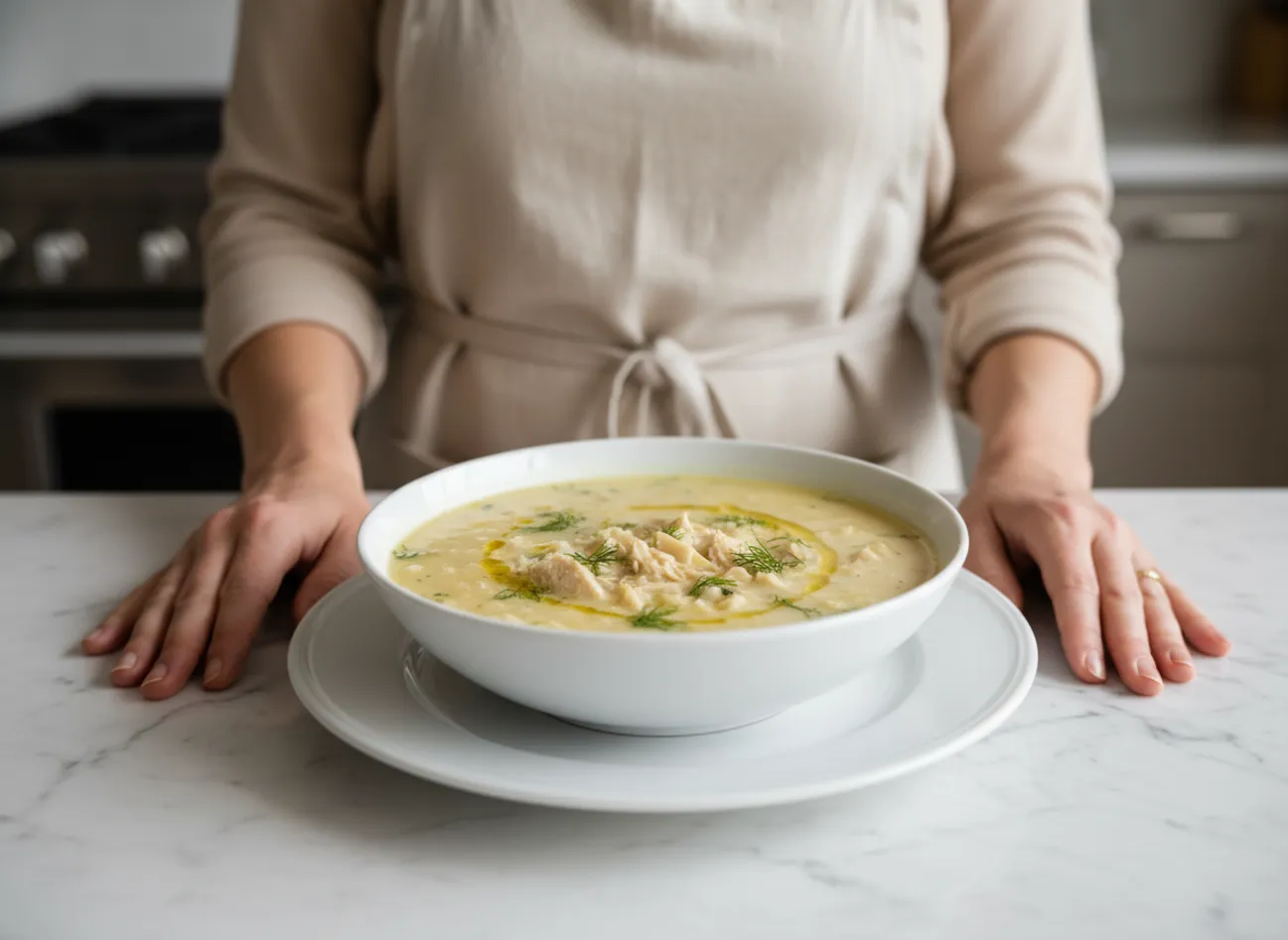
To truly appreciate this dish, it helps to understand its roots. This is more than just a recipe; it’s a cornerstone of Greek cooking known as Avgolemono. The name itself, “Avgolemono,” translates to “egg-lemon,” which describes the signature sauce that defines both this soup and a variety of other Mediterranean dishes. This sauce is a fundamental building block in Greek cuisine.
The beauty of this Avgolemono soup recipe is its adaptability. While chicken and rice or orzo are the most common additions, the base sauce can be used to add richness and flavor to everything from dolmades (stuffed grape leaves) to roasted vegetables.
The Role of Avgolemono Sauce
The egg-lemon sauce is the heart and soul of the dish. It acts as both a thickener and a flavoring agent. The process of whisking eggs and lemon juice together before tempering them with hot broth creates a stable emulsion. This technique is a testament to the resourcefulness of traditional cooking, creating a luxurious texture from simple, everyday ingredients. The sauce must be added at the very end of the cooking process, off the heat, to prevent the high temperature from breaking the emulsion and curdling the eggs.
More Than Just a Soup
While most famously used in this Greek Lemon Chicken Soup, the Avgolemono sauce is a versatile component in Greek kitchens. Its tangy, creamy profile is used to dress meats, fish, and vegetables. Understanding that this soup is just one application of a celebrated sauce gives you a deeper appreciation for its culinary importance. It represents a technique passed down through generations, turning basic ingredients into something truly special and comforting.
Tips for a Flawless Lemon Chicken Soup
Beyond the critical step of tempering, a few additional tips can make your soup even better. The quality of your ingredients and a couple of small choices during the cooking process will have a big impact on the final result. Paying attention to these details is what separates a good soup from a great one. After all, a dish with so few ingredients depends on each one being its best.
Following these suggestions will help you produce a soup that is consistently delicious, with the perfect balance of flavors and textures every time you make it.
Choosing Your Starch: Rice or Orzo?
The choice between long-grain white rice and orzo pasta is largely a matter of personal preference, as both are traditional. Rice tends to release more starch into the broth, which can contribute to a slightly thicker consistency. Orzo, a small pasta shaped like a grain of rice, holds its shape well and offers a slightly chewier texture. Whichever you choose, be sure to cook it directly in the broth. This allows the starch to absorb the savory chicken flavor, making the entire soup more cohesive and flavorful.
Using Quality Ingredients
With a simple recipe like this, ingredient quality matters. Whenever possible, use a high-quality chicken broth—homemade is best, but a good store-bought version works well. Freshly squeezed lemon juice is non-negotiable; bottled juice has a muted, often metallic taste that can’t compare to the bright, vibrant flavor of fresh lemons. Similarly, using fresh eggs will give you the richest, creamiest result. These small choices add up to a much more delicious final product.
Authentic Greek Lemon Chicken Soup (Avgolemono)
This recipe delivers a creamy, comforting bowl of classic Greek Avgolemono soup. Follow the tempering instructions carefully for a silky-smooth finish.
- Prep Time: 15 minutes
- Cook Time: 30 minutes
- Total Time: 45 minutes
- Servings: 6
- Calories: Approximately 320 kcal per serving
Ingredients
- 2 tbsp olive oil
- 1 medium yellow onion, finely chopped
- 2 carrots, finely chopped
- 2 celery stalks, finely chopped
- 8 cups high-quality chicken broth
- 1 lb boneless, skinless chicken breasts
- 1/2 cup orzo pasta or long-grain white rice
- 3 large eggs
- 1/2 cup fresh lemon juice (from 2-3 lemons)
- Salt and freshly ground black pepper to taste
- Fresh dill or parsley, chopped, for garnish
Instructions
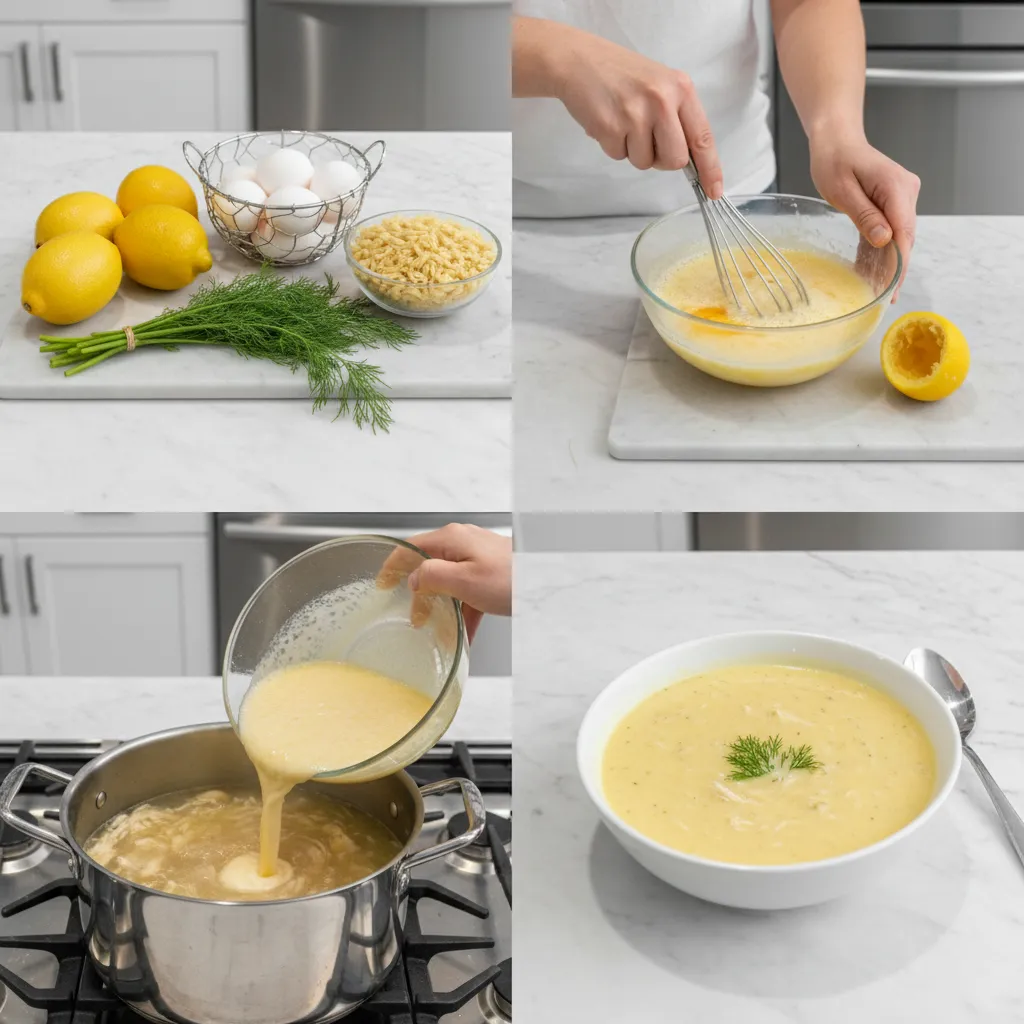
1. Sauté the Vegetables: In a large pot or Dutch oven, heat the olive oil over medium heat. Add the chopped onion, carrots, and celery. Cook until softened, about 5-7 minutes.
2. Cook the Chicken: Pour the chicken broth into the pot and bring it to a simmer. Add the whole chicken breasts, then reduce the heat to maintain a gentle simmer. Cook for 15-20 minutes, or until the chicken is cooked through.
3. Shred the Chicken & Cook the Orzo: Carefully remove the chicken breasts from the pot and place them on a cutting board. Using two forks, shred the chicken. Return the shredded chicken to the pot. Add the orzo (or rice) to the soup, and continue to simmer for about 10-12 minutes, or until the pasta is al dente.
4. Prepare the Avgolemono Mixture: While the orzo cooks, prepare the egg-lemon sauce. In a medium bowl, whisk the eggs vigorously for about a minute until they are frothy and pale. Slowly whisk in the fresh lemon juice until fully combined.
5. Temper the Eggs (The Secret Trick!): Once the orzo is cooked, turn off the heat. Very slowly, ladle about 2 cups of the hot broth from the pot into the egg-lemon mixture, one ladle at a time, whisking constantly. This is the tempering process and is crucial to prevent the eggs from scrambling. The egg mixture should now be warm to the touch.
6. Combine and Finish: Slowly pour the tempered egg mixture back into the pot with the soup, stirring gently. The soup will thicken and become creamy. Do not return the pot to the heat, as this can cause the soup to curdle.
7. Serve: Season with salt and pepper to taste. Serve the Greek Lemon Chicken Soup immediately, garnished with fresh dill or parsley.
Chef’s Notes
- Don’t Boil: Once the egg mixture is added, the soup must not boil. The residual heat is enough to thicken it perfectly.
- Reheating: Reheat leftover soup gently over low heat, stirring frequently. Do not let it boil.
- Fresh is Best: For the brightest flavor, use fresh lemon juice and fresh herbs. The difference is remarkable.
Frequently Asked Questions
How do you keep Avgolemono from curdling?
The key is tempering. You must slowly add hot broth to the egg-lemon mixture while whisking constantly. This gradually raises the eggs’ temperature. After you add the tempered mixture back to the pot, do not let the soup boil. Reheat leftovers gently over low heat.
What is Greek lemon soup called?
The traditional name for Greek lemon soup is Avgolemono (Αυγολέμονο). The name directly translates to “egg-lemon,” which describes the signature sauce that gives the soup its creamy texture and tangy flavor.
Can I make Greek Lemon Chicken Soup ahead of time?
Yes, you can. It stores well in the refrigerator for up to 3 days. The orzo or rice will continue to absorb liquid, so the soup will thicken. You may need to add a splash of chicken broth when reheating it to reach your desired consistency.
What do you serve with Avgolemono soup?
This soup is often a complete meal on its own. However, it pairs wonderfully with a side of crusty bread for dipping, a simple green salad with a light vinaigrette, or some warm pita bread with a side of feta cheese and olives.
A Bowl of Comfort
This Greek Lemon Chicken Soup is more than just a recipe; it’s a tradition, a comfort, and a taste of home. By learning the simple trick of tempering, you can confidently create a dish that is both elegant and deeply satisfying. I hope this recipe brings as much warmth and joy to your kitchen as it has to mine for all these years.