Some of my earliest memories are tied to the scent of simmering tomatoes. On chilly afternoons, my grandmother would make a simple tomato soup that felt like a warm hug in a bowl. While I cherish that classic recipe, I’ve since discovered a method that adds an incredible depth of flavor: roasting. This creamy roasted tomato soup is my tribute to those memories, updated with a simple technique that makes all the difference.
This isn’t just any tomato soup; it’s a rich, velvety, and deeply flavorful experience. The secret lies in caramelizing the tomatoes and aromatics in the oven before they even touch the pot. By doing this, you concentrate their natural sweetness and create a foundation that canned soup simply cannot match. Making this creamy roasted tomato soup has become a beloved ritual in my home, perfect for a cozy weeknight meal. It’s one of my favorite dinner ideas when I need something both comforting and impressive. For anyone craving that perfect bowl of comfort, this creamy roasted tomato soup is the answer.
Why Roasting Creates the Best Creamy Roasted Tomato Soup
The single most important step in this recipe is roasting the vegetables. While simmering raw tomatoes works, roasting them first completely changes the character of the soup for the better. This method introduces a smoky sweetness and a robust flavor that is otherwise impossible to achieve. The high, dry heat of the oven does things that a simmering pot of water cannot.
Developing Deep, Concentrated Flavor
When you roast tomatoes, you slowly evaporate their water content. As the water leaves, the tomato’s natural sugars and flavors become much more concentrated. Consequently, you get a soup that tastes more intensely of tomato. Instead of a watery or overly acidic taste, you are left with a rich, complex base that stands on its own. This process also lightly chars the edges of the vegetables, adding a subtle smoky note that complements the sweetness beautifully.
The Magic of Caramelization
Roasting also triggers caramelization. The natural sugars in the tomatoes, onions, and garlic begin to brown under the oven’s heat. This chemical reaction creates hundreds of new aromatic compounds, contributing to a savory depth you just can’t get from boiling. The result is a naturally sweet and less acidic soup, meaning you need less added sugar or cream to balance the final dish. This fundamental step is what separates a good soup from a truly memorable creamy roasted tomato soup.
Choosing Your Ingredients for a Rich Tomato Soup
A great recipe starts with great ingredients. Since this soup has such a simple ingredient list, the quality of each component directly affects the final taste. You don’t need anything fancy, but picking the right type of produce and herbs will make a noticeable difference in your finished creamy roasted tomato soup.
The Best Tomatoes for Roasting
For this recipe, Roma tomatoes are an excellent choice. They have a lower water content and fewer seeds than other varieties, which means their flavor becomes wonderfully concentrated during roasting. However, you can also use vine-ripened tomatoes or even a mix of heirloom varieties for a more complex flavor profile. The key is to choose ripe, fragrant tomatoes. If you are making this soup out of season, good-quality canned San Marzano tomatoes are a decent substitute, though you will miss some of the fresh roasted character.
Important Aromatics and Herbs
Beyond the tomatoes, the supporting cast of aromatics is vital. A whole head of garlic, roasted until soft and sweet, loses its harsh bite and becomes creamy and nutty. A sweet yellow onion adds a foundational savory sweetness. For herbs, fresh basil is a classic pairing that adds a bright, peppery note at the end. I also love adding a few sprigs of fresh thyme or a bay leaf to the roasting pan to infuse the vegetables with an earthy aroma. These simple additions build layers of flavor that make the soup taste like it simmered for hours.

Perfecting Your Roasted Tomato Soup Recipe
Once your vegetables are roasted to perfection, bringing the soup together is a straightforward process. The next few steps focus on blending, seasoning, and achieving that signature creamy texture. This part of the roasted tomato soup recipe is where you fine-tune the final product to your liking.
Achieving the Silkiest Texture
For an incredibly smooth soup, an immersion blender is a fantastic tool. You can blend the soup directly in the pot, which saves on cleanup. If you don’t have one, a standard blender works just as well. For the absolute smoothest texture, pour the soup through a fine-mesh sieve after blending to catch any remaining seeds or skins. This extra step is optional but worthwhile if you are aiming for a restaurant-quality finish. Then, a splash of heavy cream or full-fat coconut milk stirred in at the end adds richness and a velvety mouthfeel.
A Brief History of Tomato Soup
Tomato soup has a long and comforting history. While tomatoes originated in the Americas, they weren’t widely used in cooking in many parts of the world until the 18th century. The first published recipe for tomato soup appeared in 1857. However, its popularity soared in 1897 when Joseph A. Campbell’s company introduced condensed tomato soup, making it an accessible pantry staple. This roasted tomato soup recipe builds on that simple tradition, adding modern techniques to draw out even more flavor from the main ingredient.
Serving and Storing Your Homemade Tomato Soup
A bowl of creamy roasted tomato soup is a meal in itself, but the right pairings and toppings can make it even better. Furthermore, this soup is wonderful for meal prep, as its flavor often improves the next day. Knowing how to store and reheat it properly means you can enjoy it for days.
Classic Pairings and Toppings
The ultimate partner for tomato soup is a grilled cheese sandwich. The crispy, buttery bread and melted cheese are the perfect foils for the soup’s creamy acidity. Other great options include crusty bread for dipping, seasoned croutons for crunch, or a simple side salad. For toppings, consider a swirl of heavy cream or pesto, a sprinkle of fresh chopped basil or parsley, a grating of Parmesan cheese, or a dash of red pepper flakes for a little heat.
How to Store and Reheat
Let the soup cool to room temperature before storing it. You can keep it in an airtight container in the refrigerator for up to four days. The flavors will continue to meld, and it often tastes even better on the second or third day. You can also freeze this soup for up to three months. For best results, freeze it before adding the cream, then stir in the cream after reheating. To reheat, simply warm the soup gently in a saucepan over medium-low heat until it is heated through, stirring occasionally.
Recipe: Creamy Roasted Tomato Soup
Here is the complete guide to making the most flavorful and comforting tomato soup right in your own kitchen.
- Prep Time: 15 minutes
- Cook Time: 1 hour
- Total Time: 1 hour 15 minutes
- Servings: 6
- Calories: Approximately 250 per serving
Ingredients
- 3 lbs Roma tomatoes, halved lengthwise
- 1 large yellow onion, quartered
- 1 whole head of garlic
- 2 tablespoons olive oil
- 1 teaspoon salt, plus more to taste
- 1/2 teaspoon black pepper
- 4 cups vegetable broth
- 1/2 cup heavy cream (or full-fat coconut milk for a dairy-free option)
- 1/4 cup fresh basil leaves, chopped
- Optional: 1 teaspoon dried oregano or thyme
Instructions
1. Preheat Oven: Set your oven to 400°F (200°C).
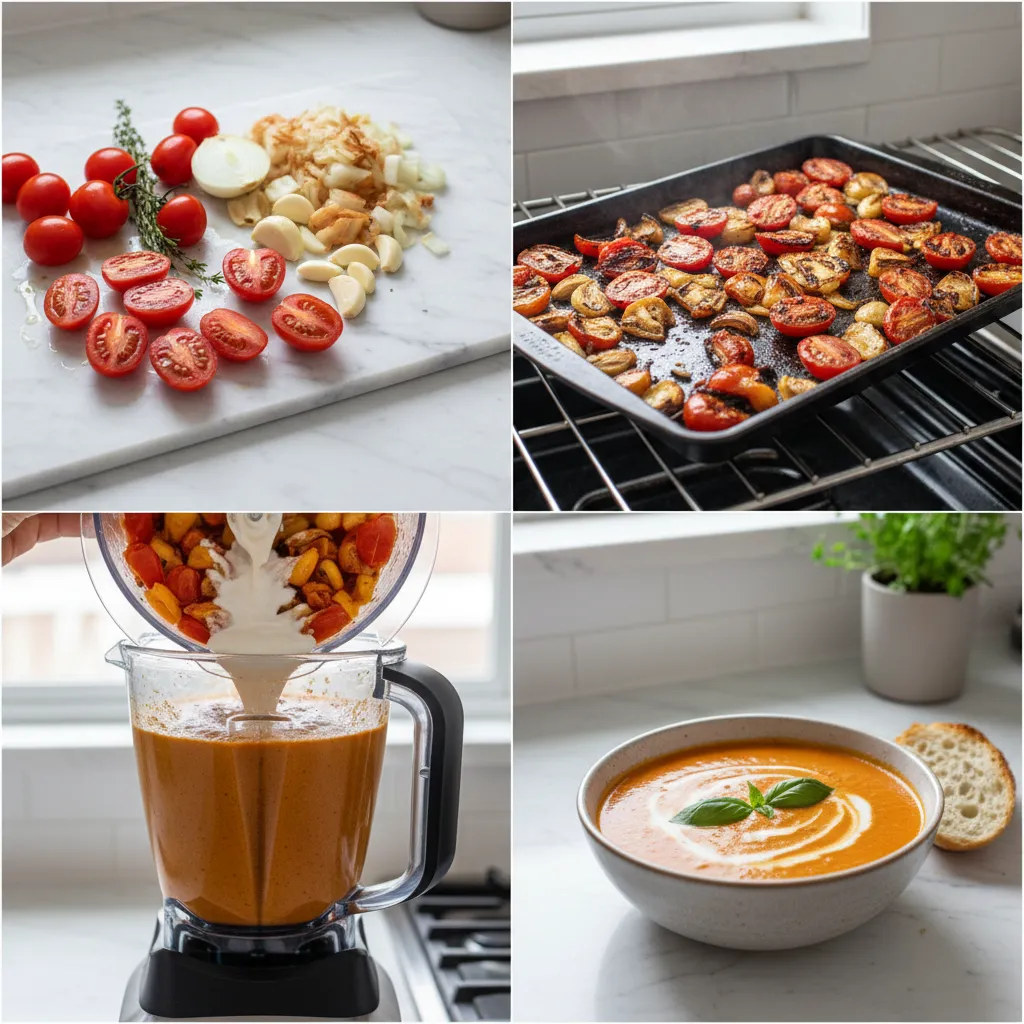
2. Prepare Vegetables: On a large baking sheet, arrange the halved tomatoes, quartered onion, and the whole head of garlic. Drizzle everything generously with olive oil and sprinkle with salt and pepper. Toss to coat evenly.
3. Roast: Place the baking sheet in the preheated oven and roast for 45-50 minutes, or until the tomatoes are slightly charred and the onion and garlic are soft and caramelized.
4. Cool and Peel Garlic: Remove the baking sheet from the oven and let it cool for a few minutes. Once the garlic is cool enough to handle, squeeze the soft, roasted cloves out of their skins. Discard the papery skins.
5. Combine Ingredients: Transfer the roasted tomatoes, onion, and roasted garlic cloves to a large pot or Dutch oven. Add the vegetable broth.
6. Simmer: Bring the mixture to a simmer over medium heat and cook for about 10 minutes to allow the flavors to meld together.
7. Blend: Use an immersion blender to blend the soup directly in the pot until it is smooth. Alternatively, carefully transfer the soup in batches to a regular blender and blend until creamy. Return the blended soup to the pot.
8. Finish the Soup: Stir in the heavy cream and fresh basil. Warm the soup over low heat, but do not let it boil. Taste and adjust seasoning with additional salt and pepper if needed.
9. Serve: Ladle the hot creamy roasted tomato soup into bowls. Garnish with extra basil, croutons, or a swirl of cream.
Chef’s Notes
- For a bit of heat, add 1/2 teaspoon of red pepper flakes to the vegetables before roasting.
- If your tomatoes are particularly acidic, a pinch of sugar can help balance the flavors. Add it at the end when you adjust the seasoning.
- The soup will thicken as it cools. You can add a splash more broth when reheating to reach your desired consistency.
Frequently Asked Questions
What kind of tomatoes are best for roasted tomato soup?
Roma tomatoes are an ideal choice because they have a meatier texture and lower water content, which makes their flavor more intense after roasting. However, vine-ripened, San Marzano, or even heirloom tomatoes also work beautifully and can add different layers of flavor.
Can I make creamy roasted tomato soup without heavy cream?
Absolutely. To make a dairy-free version, you can substitute full-fat coconut milk for the heavy cream. It adds a similar richness and creamy texture. Another option is to blend in a handful of raw cashews (soaked in hot water for 30 minutes) with the soup for a natural, plant-based creaminess.
How do I get my tomato soup to be smooth and not chunky?
The key to a smooth soup is a good blender. An immersion blender works well for convenience, but a high-powered countertop blender will give you the silkiest results. For an even smoother texture, you can pass the blended soup through a fine-mesh sieve to remove any remaining tomato skins or seeds.
How long does homemade roasted tomato soup last in the fridge?
Stored in an airtight container, your homemade soup will stay fresh in the refrigerator for up to four days. In fact, many people find the flavor is even better the next day as the ingredients have more time to come together.
A Bowl of Comfort
This creamy roasted tomato soup is more than just a recipe; it’s a bowl of pure comfort. The rich, deep flavor from the roasted vegetables creates something truly special that you’ll want to make again and again. It’s simple enough for a weeknight but tastes elegant enough for guests. I hope this soup brings as much warmth and joy to your table as it does to mine.