For me, nothing says “special occasion” quite like a perfect Roast Leg Of Lamb. I remember the aroma filling my grandmother’s house on Easter Sundays. It was the centerpiece of our table, a dish that brought everyone together. I was always intimidated by the idea of making it myself, thinking it was too complicated. However, I soon discovered the secret: a truly magnificent Roast Leg Of Lamb is actually one of the simplest and most rewarding main courses you can prepare. This recipe cuts out all the fuss and focuses on what matters: juicy, tender meat with a crisp, flavorful crust. It’s the kind of show-stopping dinner that makes memories, and I’m so excited to share my straightforward method with you. Forget any fears you have; this is the Roast Leg Of Lamb recipe that will give you confidence.
Why This Roast Leg Of Lamb Recipe Works
A spectacular Roast Leg Of Lamb doesn’t need a long list of complicated ingredients. In fact, its success rests on two fundamental pillars: a flavorful seasoning that complements the meat and the quality of the lamb itself. When you get these two things right, you set the stage for a meal that everyone will remember. This recipe focuses on a classic pairing that lets the rich taste of the lamb shine through.
The Magic of a Simple Herb and Garlic Rub
The heart of this recipe is the rub. We combine fresh rosemary, thyme, minced garlic, olive oil, salt, and pepper to create a fragrant paste. You simply rub this mixture all over the lamb. The herbs and garlic don’t just sit on the surface; as the lamb roasts, their flavors seep into the meat, seasoning it from the inside out. This simple paste also helps create a wonderfully crisp and golden-brown crust, adding a delightful texture to every slice.
Choosing the Right Cut of Lamb
When you’re at the butcher or grocery store, you’ll likely see two main options: bone-in or boneless leg of lamb. For this recipe, I strongly recommend a bone-in leg. The bone acts as a conductor of heat, which helps the meat cook more evenly. Furthermore, the bone adds an incredible amount of flavor and moisture to the finished roast, resulting in a more succulent and tender Roast Leg Of Lamb. Look for a cut that has a nice, even layer of fat on top, as this will melt during cooking and baste the meat naturally.
Preparing Your Perfect Leg of Lamb
Proper preparation before the lamb even sees the inside of an oven is a critical step. A few simple actions can make a huge difference in the texture and flavor of your final dish. These preparations don’t take much time, but their impact is significant, turning a good roast into a great one. Getting these details right builds the foundation for a perfectly cooked roast.
Bringing the Lamb to Room Temperature
Never roast a leg of lamb straight from the refrigerator. Taking the chill off the meat is a game-changer. Let the lamb sit on the counter for at least one to two hours before you plan to cook it. This allows the meat to cook much more evenly. A cold roast put into a hot oven will result in an exterior that’s overcooked by the time the interior reaches the correct temperature. A room-temperature roast cooks more quickly and uniformly.
Scoring the Fat for a Crispier Skin
Look at the top of your leg of lamb; you’ll see a layer of fat, often called the fat cap. Scoring this fat is a simple technique with big results. Using a sharp knife, make shallow diagonal cuts across the fat in a diamond pattern. Be careful not to cut into the meat itself. This scoring serves two purposes: it allows the herb and garlic rub to penetrate deeper, and it helps the fat render out more effectively, giving you that irresistibly crispy, golden skin on your Roast Leg Of Lamb.
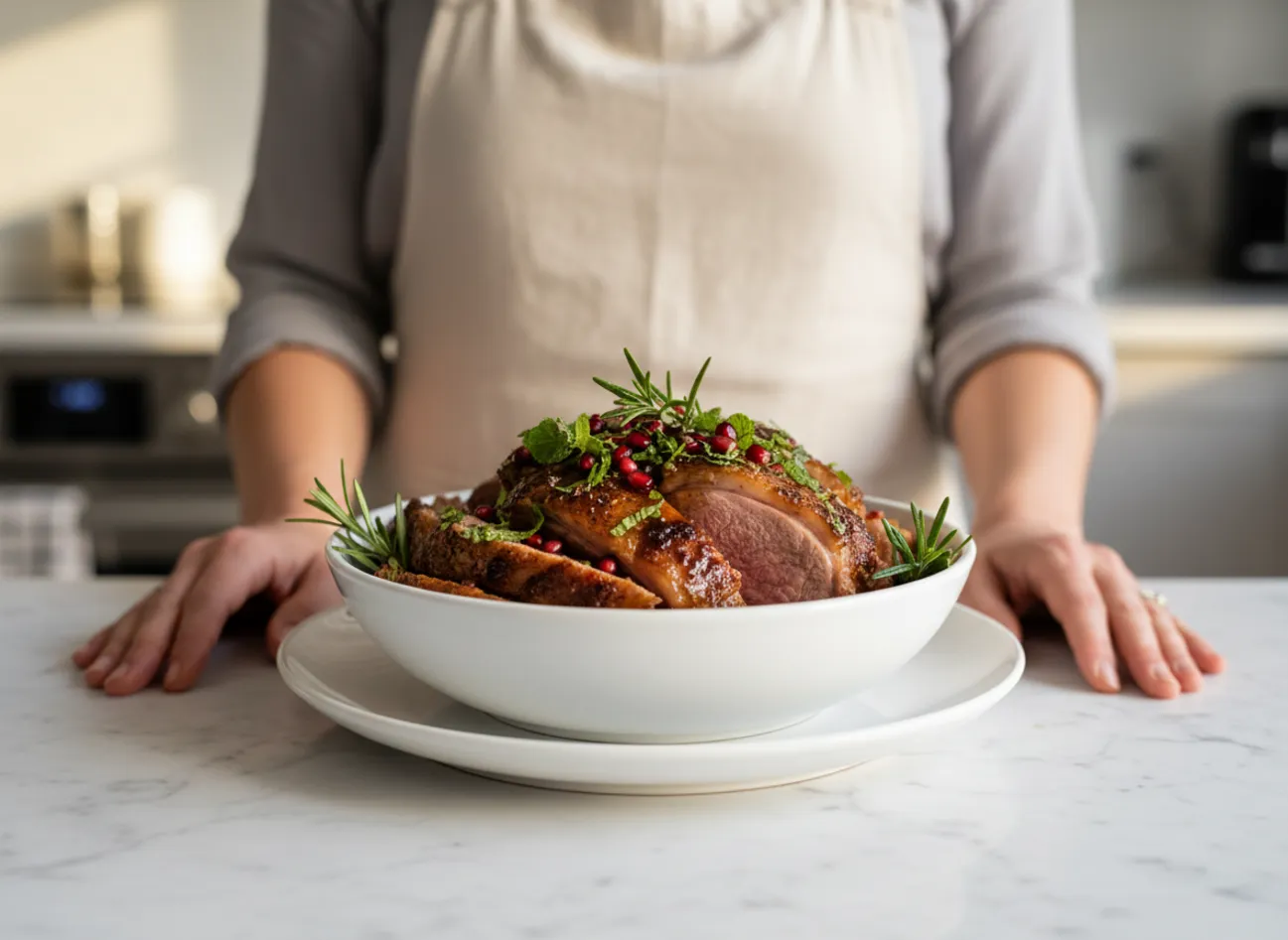
Mastering Leg of Lamb Cooking Times and Temperatures
The most common point of anxiety when cooking a large cut of meat is knowing when it’s done. Overcooked lamb can be dry and tough, while undercooked meat is unappealing. Thankfully, you can remove all the guesswork with one simple tool. Understanding the relationship between time, temperature, and your desired level of doneness is the key to mastering leg of lamb cooking times.
The Importance of a Meat Thermometer
If you buy one kitchen tool for this recipe, make it a reliable instant-read meat thermometer. It is the only way to know for certain when your Roast Leg Of Lamb is cooked to perfection. Roasting charts are a good guideline, but every oven is different, and the exact size and shape of your lamb will affect the cook time. A thermometer provides precision and gives you total control, so you can pull the roast from the oven at the exact right moment.
A Guide to Doneness
Insert the thermometer into the thickest part of the meat, being careful not to touch the bone. The internal temperature will tell you its doneness. For lamb, which is different from mutton, the ranges are generally as follows. For a rare roast, aim for 125°F. For medium-rare, which is what I recommend for the best flavor and texture, look for 130-135°F. For medium, target 140-145°F. For a medium-well roast, you want 150-155°F. Keep in mind that the temperature will rise a few degrees as the roast rests. The total leg of lamb cooking times will vary, but a good rule of thumb is about 15-20 minutes per pound for medium-rare.
Key Steps After Roasting Your Lamb
You pulled it from the oven, and it looks and smells incredible. The temptation is to start carving immediately, but patience is a virtue, especially now. The final steps of resting and carving are just as important as the cooking process itself. Skipping this part can undo all your hard work, so take a deep breath and give your beautiful roast the final attention it deserves. These final touches are what make a good meal truly memorable.
Why You Must Rest Your Roast
This is the most critical post-cooking step. When the Roast Leg Of Lamb is in the oven, its juices are pushed toward the center of the meat. If you slice into it right away, all that delicious moisture will run out onto your cutting board. You must let the roast rest. Tent it loosely with foil and let it sit for at least 15 to 20 minutes. During this time, the muscle fibers relax, and the juices redistribute throughout the meat, resulting in a tender and juicy slice every time.
Carving Your Roast Leg Of Lamb Like a Pro
Carving a bone-in leg of lamb is easier than it looks. First, place the roast on a large cutting board with a well to catch any juices. Hold the bone with a towel or carving fork to steady it. Then, using a long, sharp carving knife, make thin slices perpendicular to the bone. Slice down until your knife hits the bone. Finally, run your knife horizontally along the top of the bone to release the slices. Arrange them on a platter and pour any collected juices over the top before serving.
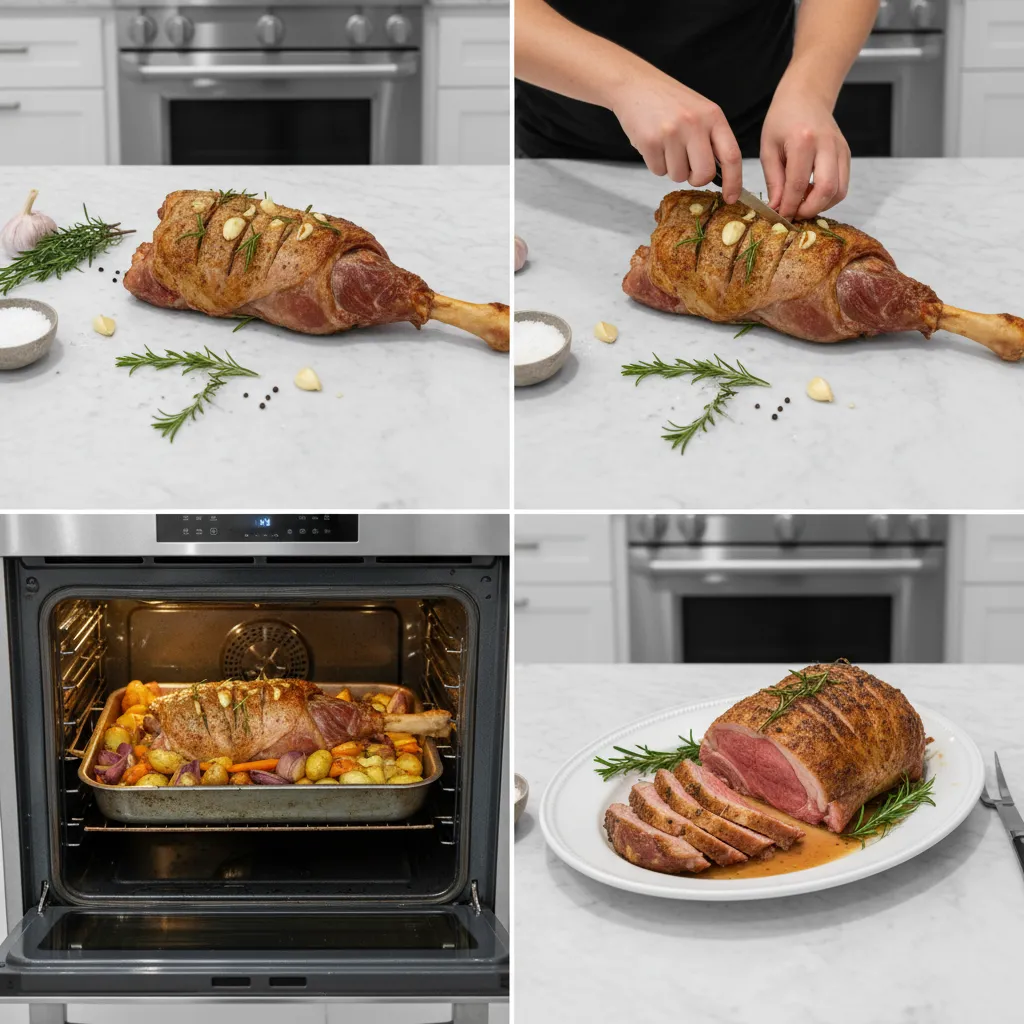
Easy Garlic and Herb Roast Leg Of Lamb
This recipe delivers a juicy, flavorful roast with a beautifully crisp crust every time. Follow these simple steps for a centerpiece dish that is sure to impress.
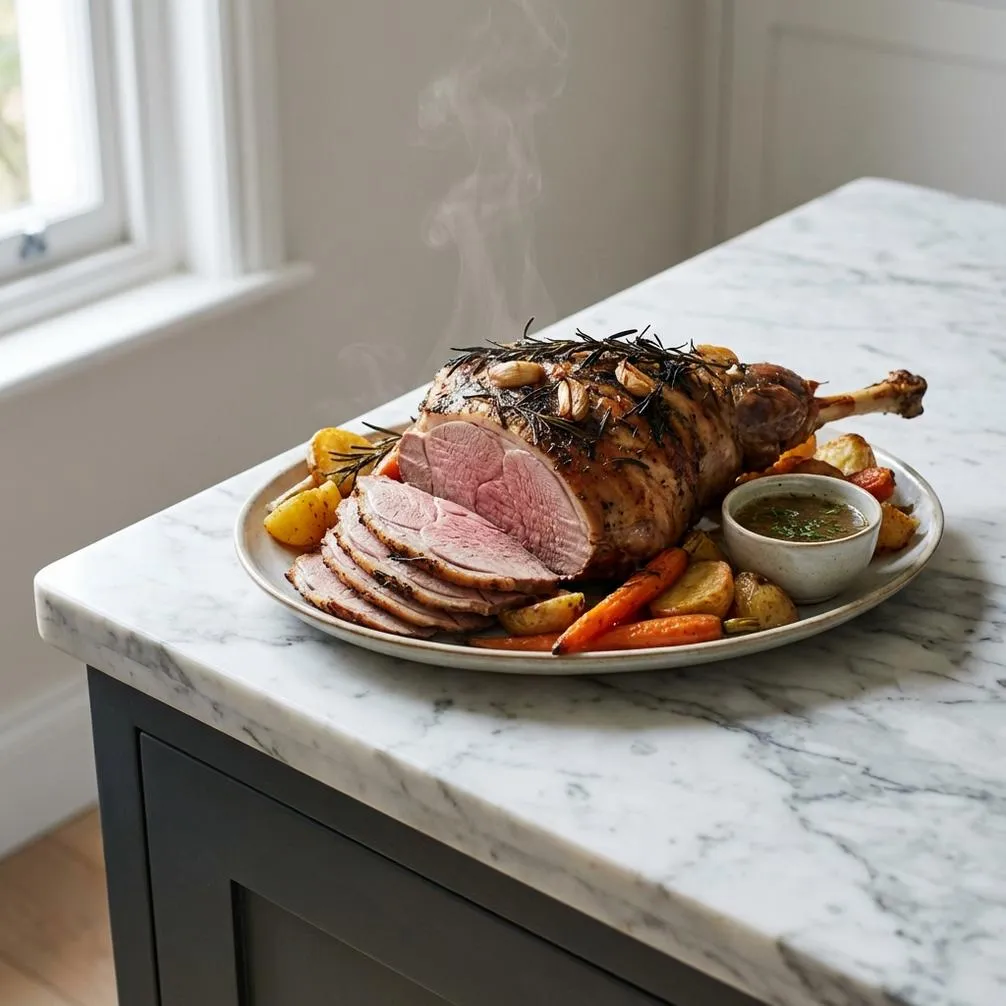
Secret to the best Roast Leg Of Lamb: 5 simple tips
Ingredients
- 1 bone-in leg of lamb about 4-5 lbs, fat trimmed to 1/4 inch
- 8 cloves garlic minced
- 3 tbsp fresh rosemary chopped
- 2 tbsp fresh thyme leaves only
- ¼ cup extra virgin olive oil
- 1 lemon zest and juice
- 2 tsp coarse sea salt or to taste
- 1 tsp black pepper freshly ground
Instructions
- Tip 1: Bring to Room Temperature. Remove the leg of lamb from the refrigerator 1-2 hours before you plan to cook it. Pat it completely dry with paper towels. This ensures the lamb cooks evenly from edge to center.
- Preheat your oven to 400°F (200°C). While the oven heats, prepare the herb paste. In a small bowl, combine the minced garlic, chopped rosemary, thyme, olive oil, lemon zest, salt, and pepper. Mix well to form a thick paste.
- Tip 2: Score the Lamb. Using a sharp knife, make shallow, 1/4-inch deep cuts in a diamond pattern across the fat cap of the lamb. Be careful not to cut into the meat. This allows the seasoning to penetrate deeply and helps the fat to render beautifully.
- Tip 3: Season Generously. Rub the garlic and herb paste all over the entire surface of the lamb, pushing it into the score marks and crevices. Squeeze the juice from the zested lemon over the lamb.
- Place the seasoned lamb on a rack inside a roasting pan. Roast for 15 minutes at 400°F (200°C) to get a nice brown crust. Then, reduce the oven temperature to 325°F (165°C).
- Tip 4: Use a Meat Thermometer. Continue roasting for approximately 15-20 minutes per pound. Start checking the internal temperature after about 60 minutes. For medium-rare, aim for 130-135°F (54-57°C). For medium, 140-145°F (60-63°C). Insert the thermometer into the thickest part of the meat, avoiding the bone.
- Tip 5: Let It Rest! Once the lamb reaches your desired temperature, remove it from the oven. Transfer the lamb to a cutting board and tent it loosely with aluminum foil. Let it rest for at least 15-20 minutes. This crucial step allows the juices to redistribute throughout the meat, ensuring every slice is moist and tender.
- To serve, carve the lamb against the grain into thin slices. Arrange on a platter and serve immediately with your favorite side dishes.
Notes
- Room Temperature is Key: Let the lamb sit out for 1-2 hours before roasting for even cooking.
- Score the Fat: Make shallow cuts in the fat cap to allow seasonings to penetrate and fat to render beautifully.
- Don’t Skimp on Seasoning: Be generous with the garlic-herb paste, working it into every crevice.
- Trust the Thermometer: For perfect results, cook to temperature, not time. 130-135°F for medium-rare is recommended.
- Rest is Best: Let the lamb rest for at least 15-20 minutes before carving to guarantee a juicy result.
Frequently Asked Questions
What temperature should a leg of lamb be cooked to?
The final temperature depends on your preferred doneness. For medium-rare, the most popular choice for lamb, the internal temperature should be 130-135°F when checked with a meat thermometer. For medium, aim for 140-145°F, and for medium-well, 150-155°F. Remember to remove the lamb from the oven about 5 degrees below your target temperature, as it will continue to cook while it rests.
How long does it take to roast a 5 lb leg of lamb?
As a general guideline, you should plan on about 15-20 minutes of roasting time per pound for a medium-rare Roast Leg Of Lamb. Therefore, a 5 lb leg of lamb will take approximately 1 hour and 15 minutes to 1 hour and 40 minutes. However, always rely on a meat thermometer for accuracy rather than just the clock.
Should I cover my leg of lamb when roasting?
You should roast the leg of lamb uncovered. This allows the heat to circulate freely around the meat, creating a delicious, crispy, and golden-brown crust on the outside. If you notice the top is browning too quickly before the inside is cooked, you can loosely tent it with a piece of aluminum foil for the remainder of the cooking time.
What do you serve with roast leg of lamb?
A Roast Leg Of Lamb pairs wonderfully with many classic side dishes. Roasted potatoes or a creamy potato gratin are excellent choices. Steamed or roasted vegetables like asparagus, green beans, or carrots also go very well. For a traditional touch, consider serving it with a simple mint sauce or a gravy made from the pan drippings.
A Perfect Roast for Any Occasion
Making a perfect Roast Leg Of Lamb is a fantastic way to build your cooking confidence and create a truly special meal. With its simple preparation and incredible flavor, this recipe proves that you don’t need complex techniques to produce a show-stopping main course. It’s a dish that brings warmth and a sense of occasion to any table, whether for a holiday feast or a quiet Sunday dinner. I hope this becomes a beloved recipe in your home, just as it is in mine.