One of my fondest memories is visiting a Christmas market in Germany with my family. The air was crisp and filled with the scent of roasted chestnuts and spiced cider. But the aroma I remember most was the warm, bready smell of freshly baked pretzels. That day, I discovered what a real pretzel should taste like: deeply browned on the outside with a soft, chewy interior. It was a world away from the hard, crunchy snacks I knew. I spent years trying to recreate that magic, and this German Soft Pretzel Sticks Recipe is the result of that journey. It captures the authentic flavor and texture of those market pretzels, yet it’s simple enough to make in your own kitchen in about an hour. Forget complicated shaping; these sticks are easy to form and perfect for dipping. This is the ultimate German Soft Pretzel Sticks Recipe for bringing a taste of Bavaria home.
Why This Pretzel Sticks Recipe Works
Making authentic German pretzels can seem intimidating, but this recipe breaks it down into simple, manageable steps. We skip the traditional lye bath, which can be hazardous, and instead use a safe and effective baking soda solution. This simple switch still gives you that classic deep brown crust and distinctive pretzel taste. Moreover, shaping the dough into sticks is much faster and easier than twisting it into the classic pretzel shape, making this the perfect recipe for beginners or when you’re short on time.
The Perfect Chewy Texture
The secret to the amazing chewiness in this German Soft Pretzel Sticks Recipe is the dough’s hydration level and the brief boil in an alkaline solution. The flour and water ratio creates a sturdy yet pliable dough. Then, the quick dip in the baking soda bath before baking gelatinizes the starches on the surface. This process sets the crust quickly in the oven, preventing the pretzels from puffing up like regular bread rolls and giving them their signature dense, chewy interior.
Authentic Flavor Without the Fuss
You don’t need complicated ingredients to get that authentic pretzel flavor. The key taste comes from the Maillard reaction, which is supercharged by the alkaline baking soda bath. This chemical reaction creates the deep, savory, and slightly tangy notes characteristic of a true German pretzel. A final sprinkle of coarse sea salt adds the perfect finishing touch, balancing the rich flavor of the bread.
Gathering Your Ingredients for Pretzel Success
This recipe uses common pantry staples, so you might already have everything you need to get started. The simplicity of the ingredients allows the technique to shine, creating a truly special snack. From the yeast that gives it life to the butter that adds richness, each component plays a critical role.
The Foundation: Flour, Yeast, and Sugar
We use all-purpose flour for this recipe because it provides the right balance of protein for a chewy, but not tough, texture. Active dry yeast is our leavening agent, responsible for the pretzel’s rise and airy structure. A small amount of brown sugar does more than just add a hint of sweetness; it also feeds the yeast, helping it activate quickly and giving the dough a slightly deeper flavor than white sugar would.
The Flavor Trio: Butter, Salt, and Baking Soda
Melted unsalted butter enriches the dough, giving it a soft texture and a delicious, savory flavor. We use salt in the dough itself for flavor and coarse sea salt for sprinkling on top before baking. The coarse salt not only adds a salty crunch but also looks beautiful against the dark brown crust. Finally, baking soda is the star of the show. It creates the alkaline bath that gives these pretzels their iconic color and taste.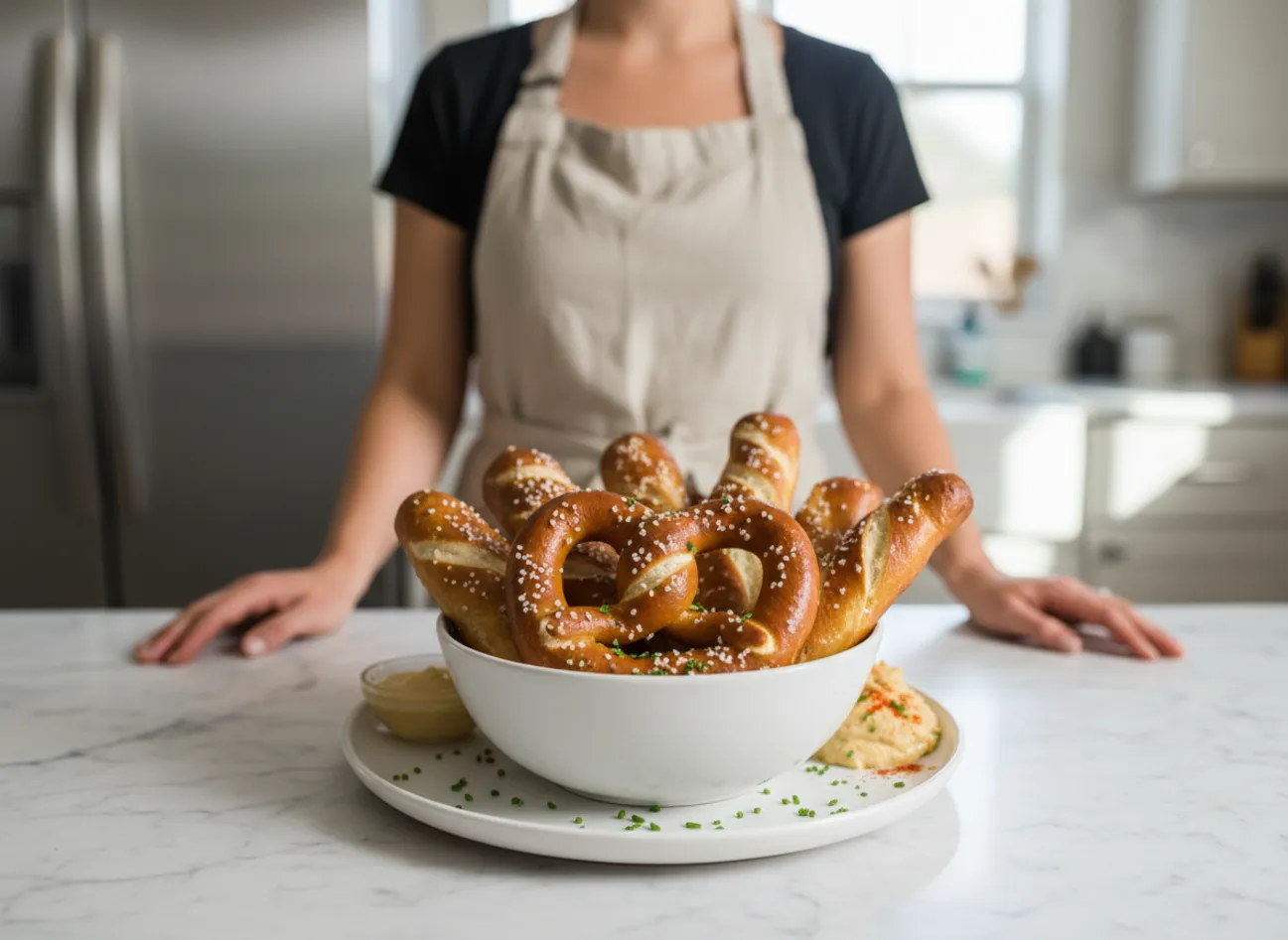
A Taste of Tradition: The Bavarian Pretzel Stick
While many people associate pretzels with snack bags, their history is long and rooted in European tradition. The classic knotted shape is said to represent arms crossed in prayer. This Bavarian pretzel sticks recipe honors that heritage by focusing on the authentic taste and texture that have made them a staple at German bakeries and beer gardens for centuries. Known as Laugenstangen in German, these pretzel sticks are just as popular as their twisted counterparts.
From Monasteries to Modern Kitchens
The history of the pretzel is thought to trace back to European monasteries in the Middle Ages. They were a simple food made from flour and water, often given to children as a reward. Over time, they became a symbol of good luck and a staple food across Germany, particularly in the southern region of Bavaria. This Bavarian pretzel sticks recipe brings that simple, satisfying tradition right to your home.
The Role of the Baking Soda Bath
The defining step in any authentic German or Bavarian pretzel sticks recipe is the alkaline bath. Traditionally, this was done with food-grade lye, which gives pretzels their signature dark, shiny crust. However, lye is caustic and can be dangerous to handle at home. Our recipe uses a concentrated baking soda solution, which is much safer but achieves a very similar chemical reaction. It raises the pH of the dough’s surface, accelerating the browning process in the oven and creating that unmistakable pretzel flavor.
Serving and Storing Your Homemade Pretzels
These German soft pretzel sticks are incredibly versatile. They are perfect on their own, still warm from the oven, but they also pair wonderfully with a variety of dips and dishes. Proper storage is key to keeping them fresh, though they are certainly best enjoyed the day they are made.
Perfect Pairings and Dips
There is nothing better than dipping a warm pretzel stick into a classic cheese sauce or a spicy brown mustard. They are also a fantastic side for a hearty soup; try them with a creamy potato leek soup for a comforting meal. For a sweet and savory twist, serve them with a whipped honey butter. At a party, arrange them on a platter with various mustards, cheese dips, and cured meats for an easy and impressive appetizer.
How to Keep Your Pretzels Fresh
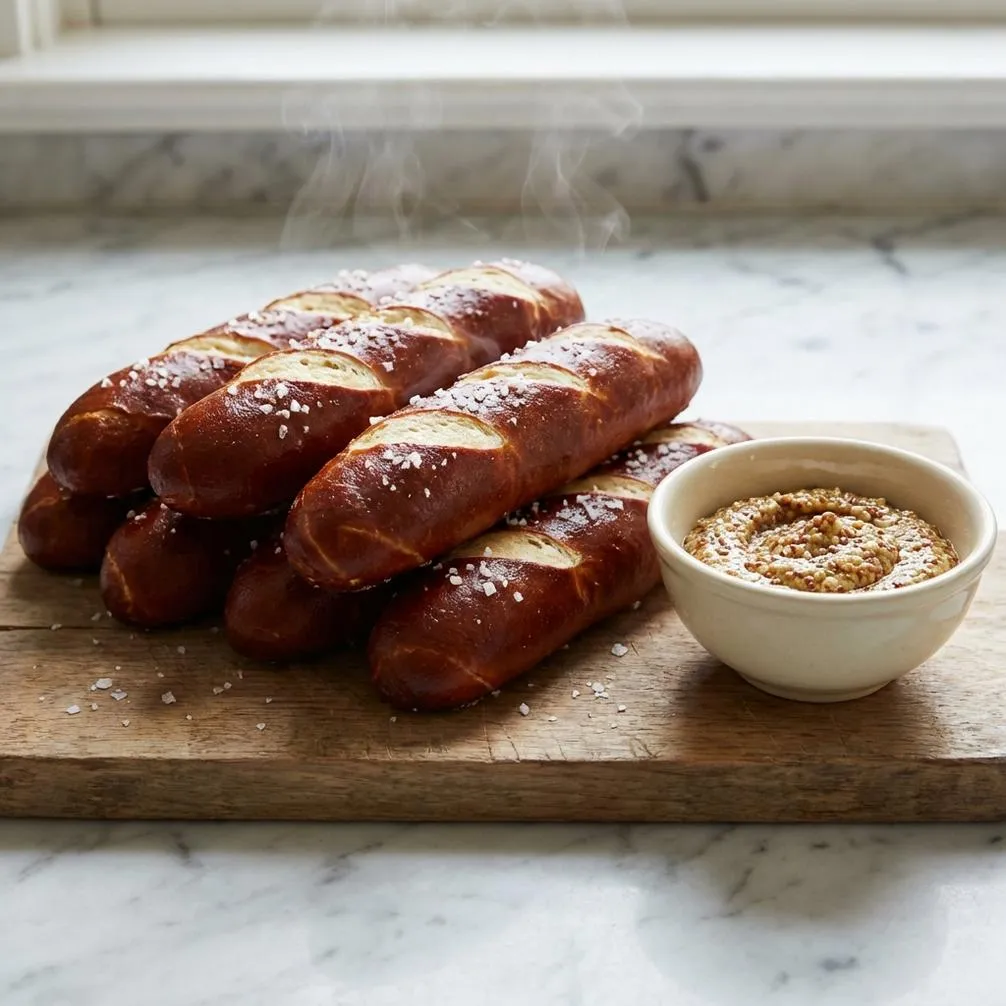
Soft pretzels are at their peak on the day they are baked. If you have leftovers, store them in a paper bag at room temperature for up to two days. A plastic bag will trap moisture and make them soggy. To reheat, simply place them in a 350°F (175°C) oven for about 5 minutes, or until they are warmed through and the crust has crisped up again. You can also freeze the baked pretzel sticks for up to a month in a freezer-safe bag.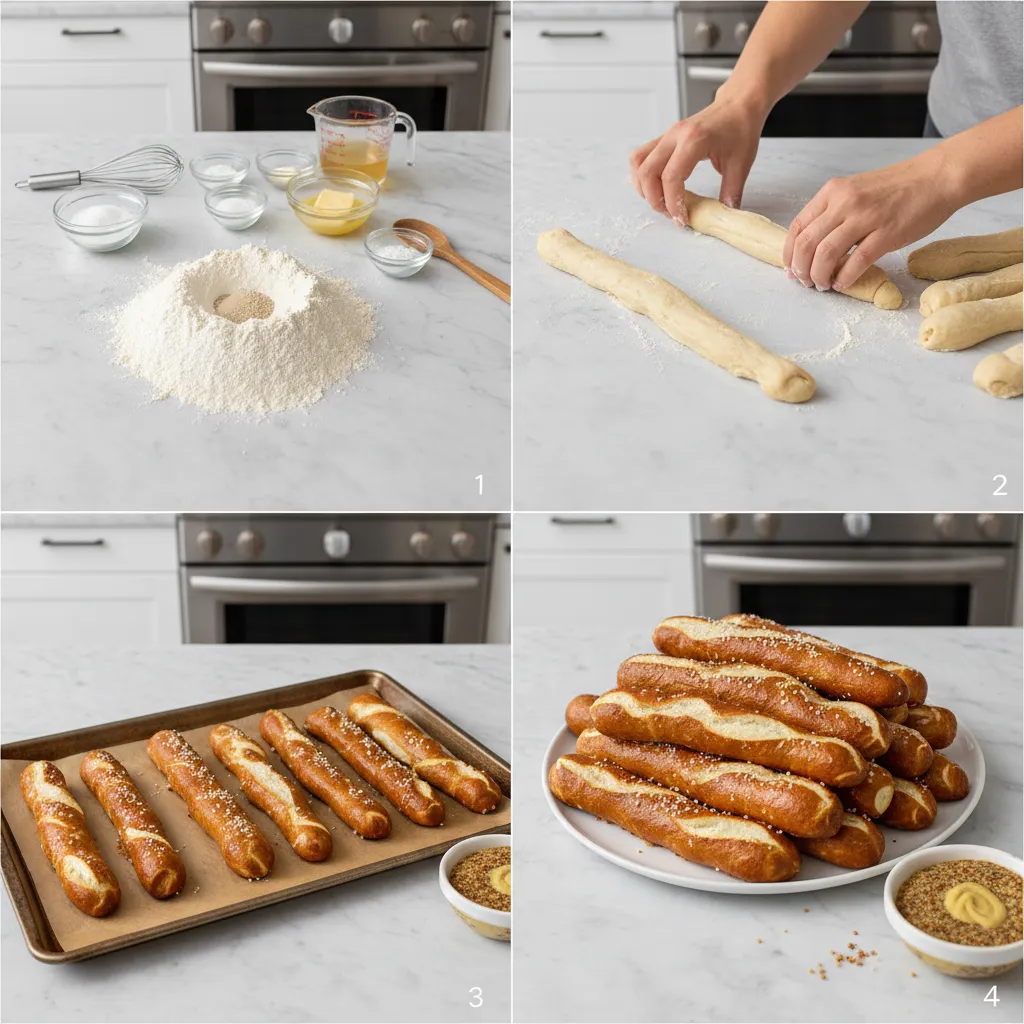
German Soft Pretzel Sticks Recipe
German Soft Pretzel Sticks
Ingredients
Pretzel Dough
- 1.5 cups warm water 110°F / 43°C
- 1 tbsp brown sugar
- 2.25 tsp active dry yeast 1 packet
- 4.5 cups all-purpose flour plus more for dusting
- 2 tsp fine sea salt
- 4 tbsp unsalted butter melted
Baking Soda Bath
- 10 cups water
- 0.5 cup baking soda
Topping
- 1 large egg beaten with 1 tablespoon water for egg wash
- to taste coarse sea salt for topping
Instructions
- In a mixing bowl or stand mixer bowl, combine warm water, brown sugar, and yeast. Let sit for 5–10 minutes until the mixture becomes foamy.
- Add flour, fine sea salt, and melted butter. Knead using a dough hook on low speed for 5–7 minutes until the dough becomes smooth and elastic. If kneading by hand, knead on a floured surface for 8–10 minutes.
- Form the dough into a ball and place it in a lightly oiled bowl. Cover with a kitchen towel and let rise in a warm place for 20–30 minutes until slightly puffed.
- Preheat oven to 425°F (220°C) and line two baking sheets with parchment paper. Turn the dough onto a clean surface and divide into 12 equal pieces. Roll each piece into a log about 8–10 inches long and place on the baking sheets.
- Bring 10 cups of water to a rolling boil in a large pot. Slowly add the baking soda, stirring carefully as it will foam up.
- Using a slotted spoon, lower 2–3 pretzel sticks at a time into the boiling water for 30 seconds. Remove and place back on the prepared baking sheets.
- Brush each pretzel stick with egg wash and sprinkle with coarse sea salt. Bake for 12–15 minutes until deep golden brown.
- Allow the pretzel sticks to cool for a few minutes on the baking sheet before transferring to a wire rack. Serve warm.
Notes
Frequently Asked Questions
What makes German pretzels different from American pretzels?
German pretzels, or Laugengebäck, typically have a denser, chewier texture and a deeply browned, savory crust achieved through an alkaline bath (traditionally lye, but often baking soda in home recipes). American soft pretzels are often lighter, fluffier, and sweeter, with a less intense crust.
Why do you boil pretzels in baking soda water?
Boiling the pretzel dough in a baking soda and water solution creates an alkaline environment on the surface of the dough. This process helps create the classic dark brown, shiny crust and the distinctive, slightly tangy flavor that is characteristic of authentic German pretzels.
Can I make the pretzel dough ahead of time?
Yes, you can prepare the dough ahead of time. After kneading, place the dough in an airtight container or a covered bowl and refrigerate it for up to 24 hours. When you are ready to bake, let the dough sit at room temperature for about 30 minutes before proceeding with shaping and boiling.
What are the best dips for soft pretzel sticks?
Classic choices include spicy brown mustard, beer cheese dip, or a simple queso. They are also delicious with honey mustard, spinach and artichoke dip, or even a sweet cream cheese frosting for a dessert-like treat.
Conclusion
Bringing the taste of a German bakery into your kitchen is easier than you think. This German Soft Pretzel Sticks Recipe delivers that authentic, chewy goodness with a perfectly salty, brown crust. It proves that you don’t need special skills or complicated steps to create a truly memorable snack. So, roll up your sleeves, get a little flour on your hands, and enjoy the wonderful aroma of fresh pretzels baking in your oven. Happy baking