There are certain smells that instantly transport me back to my childhood, and the rich aroma of a Savory Slow-Roast Lamb Shoulder is at the top of that list. Sunday dinners were a big deal in our house. The day often started with a big family meal, and my grandmother would prepare a special breakfast to get everyone gathered and talking. But the real star was always the main course simmering away for hours. My grandmother’s secret was patience. She taught me that you can’t rush perfection, especially with a cut like lamb shoulder. This Savory Slow-Roast Lamb Shoulder recipe is my tribute to her—a dish that fills the home with an incredible scent and brings everyone to the table. It’s the kind of meal that creates memories. I’ve refined her method slightly, but the core principle remains: simple seasonings, low heat, and plenty of time. This is more than just a recipe; it’s a tradition I’m excited to share with you. Get ready to create your own amazing Savory Slow-Roast Lamb Shoulder that will have your family asking for seconds.
Why You’ll Love This Savory Slow-Roast Lamb Shoulder
This recipe is a showstopper, but it’s built on a foundation of simplicity. It doesn’t require complex techniques or a long list of fancy ingredients. Instead, it relies on the fundamental magic of slow cooking to turn a humble cut of meat into something truly special. The result is a juicy, tender centerpiece that tastes like you spent all day in the kitchen, even though most of the cooking time is completely hands-off. It’s the perfect dish for a special occasion, a holiday meal, or just a lazy Sunday when you want to treat your family.
The Magic of Low and Slow Cooking
The key to an unforgettable Savory Slow-Roast Lamb Shoulder is cooking it low and slow. This method gently breaks down the tough connective tissues and intramuscular fat within the shoulder cut. Over several hours, that tissue melts into rich, flavorful gelatin, which bastes the meat from the inside out. This process keeps the lamb incredibly moist and creates that sought-after, fork-tender texture. Rushing the cooking with high heat would only make the meat tough and dry. Patience is your most important ingredient here. When you give the lamb the time it needs, you are rewarded with a beautifully succulent roast.
Simple Ingredients, Big Flavor
You do not need a pantry full of exotic spices to make this dish shine. The natural, rich taste of the lamb is the main attraction. We simply support it with a classic combination of garlic, rosemary, salt, and pepper. A little olive oil helps create a crispy, golden-brown crust, while the aromatics permeate the meat as it roasts. This minimalist approach proves that a few high-quality ingredients, used correctly, can produce profound flavors. The herbs and garlic become wonderfully fragrant, creating a savory foundation that complements the lamb perfectly without overpowering it.
Choosing the Perfect Cut for Your Roast Lamb
Starting with the right cut of meat is the first step toward success. The lamb shoulder is an excellent choice for slow roasting because it’s a hard-working muscle. This means it has more fat and connective tissue than leaner cuts like the leg or loin. While those characteristics might make it tough if cooked quickly, they are exactly what makes it ideal for a long, slow roast. The marbling and collagen render down, giving you a tender and flavorful result that’s hard to achieve with other cuts.
Bone-In vs. Boneless Lamb Shoulder
You can find both bone-in and boneless lamb shoulder at most butchers. For this Savory Slow-Roast Lamb Shoulder recipe, I strongly recommend using a bone-in cut. The bone does two wonderful things: it adds a significant amount of flavor to the meat as it cooks, and it helps the roast cook more evenly by conducting heat. A bone-in shoulder also tends to be more succulent. While a boneless shoulder is easier to carve, you sacrifice some of that deep, foundational flavor. If you can only find boneless, it will still be delicious, but a bone-in cut truly makes a difference.
What to Look for at the Butcher
When you’re at the store or butcher shop, look for a lamb shoulder that has a nice, thick fat cap on top. This layer of fat is crucial, as it will melt and baste the meat during the long cooking process, keeping it moist and adding flavor. The meat itself should have a healthy, pinkish-red color. Ask your butcher for a shoulder roast that is roughly 4 to 5 pounds, which is a great size for serving about six to eight people. Don’t be shy about asking questions; a good butcher can help you pick the perfect cut for your meal.
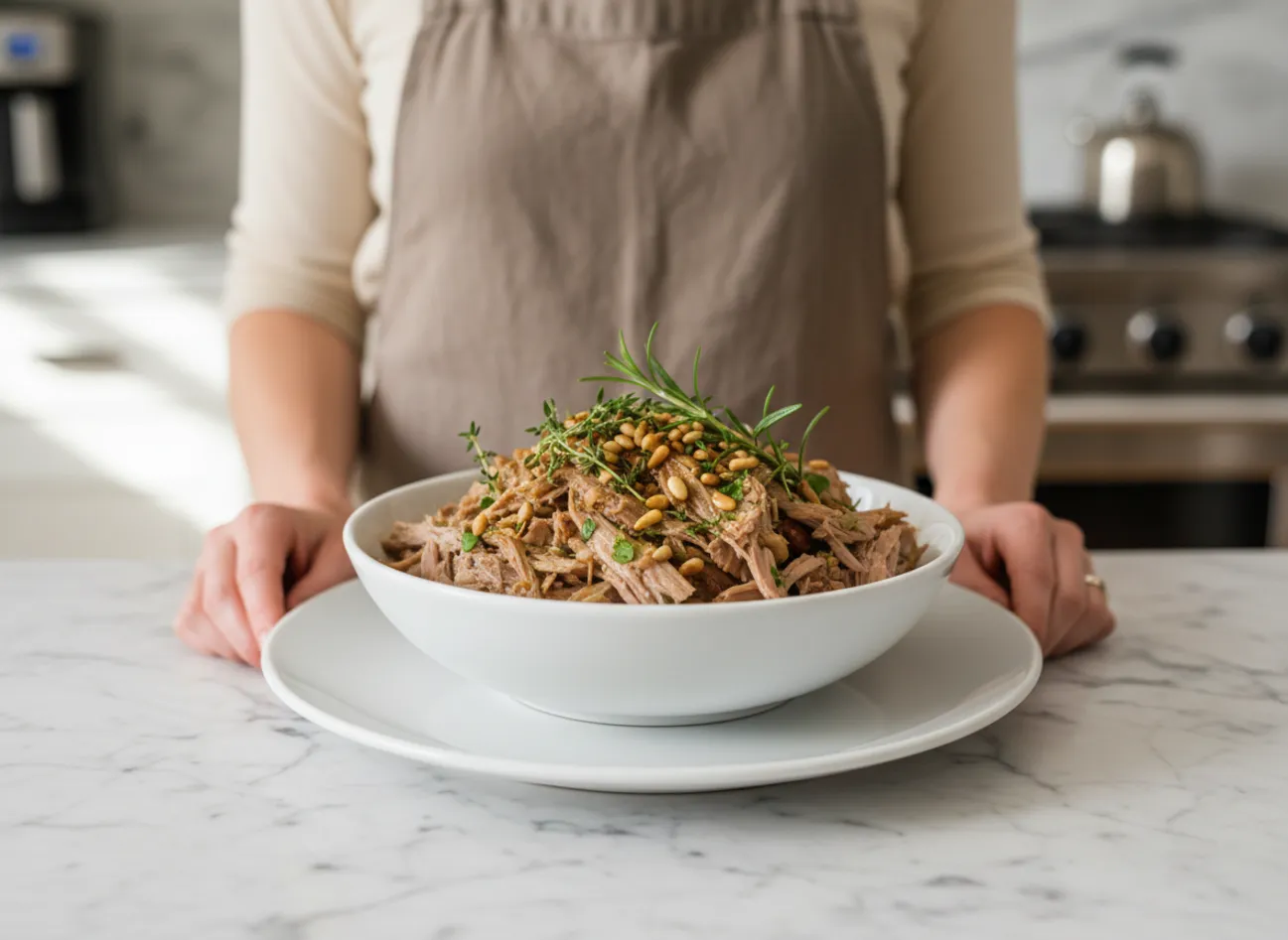
Achieving That Perfect Fall-Off-The-Bone Lamb Shoulder
The ultimate goal of this recipe is to produce a fall-off-the-bone lamb shoulder. This texture isn’t just a turn of phrase; it’s a sign that you’ve cooked it perfectly. When the meat is so tender that you can shred it with a fork, you know you’ve successfully rendered all the tough bits into succulent, juicy goodness. Reaching this point requires a couple of key techniques that set the stage for a perfect roast. It’s about building layers of flavor and texture from the very beginning.
The Importance of a Good Sear
Before the lamb goes into the oven for its long, slow roast, you must sear it on all sides. This step is not just for color; it’s for flavor. Searing the meat in a hot pan creates a deeply browned crust through the Maillard reaction. This chemical process develops complex, savory notes that you cannot get from roasting alone. It also creates a beautiful texture that contrasts with the tender interior of the finished roast. Take your time with this step, making sure every surface of the lamb shoulder, including the sides, is golden brown before you proceed.
Understanding Different Cuts of Lamb
The shoulder is just one of many wonderful cuts you can get from this animal. Each part of the lamb offers a different texture and is suited to different cooking methods. For instance, lamb chops and loin are tender and best for quick cooking like grilling or pan-searing. The leg is leaner than the shoulder and is often roasted, though it won’t become as shreddable. Understanding the differences between lamb and mutton and their various cuts can make you a more confident cook. For our purpose, the shoulder remains the champion for a slow-cooked, shreddable feast.
Serving and Storing Your Slow-Roast Lamb
Once your Savory Slow-Roast Lamb Shoulder is perfectly cooked, resting it is the final, crucial step before serving. Let it sit on the cutting board, tented loosely with foil, for at least 15 to 20 minutes. This allows the juices, which have moved to the surface during cooking, to redistribute throughout the meat. If you slice into it right away, all that delicious moisture will run out onto the board. After resting, you can either carve it into thick slices or use two forks to pull the meat into large, rustic shreds for a more casual presentation.
Classic Side Dish Pairings
This rich and savory lamb pairs beautifully with a variety of side dishes. Creamy mashed potatoes or a garlic-infused polenta are perfect for soaking up the delicious pan juices. For vegetables, you can’t go wrong with classic roasted root vegetables like carrots and parsnips, which you can even cook in the same roasting pan as the lamb. Green beans almondine or simple steamed asparagus add a fresh, vibrant contrast to the richness of the meat. A simple green salad with a bright vinaigrette can also help cut through the fat and balance the meal.
What to Do With Leftovers
If you’re lucky enough to have leftovers, they are incredibly versatile. The shredded lamb is fantastic in sandwiches, especially on a crusty roll with a bit of mint jelly or a yogurt-based sauce. You can also use it as a base for shepherd’s pie, toss it with pasta and a simple tomato sauce, or add it to a hearty stew. My personal favorite is to create a savory lamb hash for a weekend brunch. The possibilities are nearly endless, making this a meal that keeps on giving long after the main event is over. A fall-off-the-bone lamb shoulder is just as good the next day.
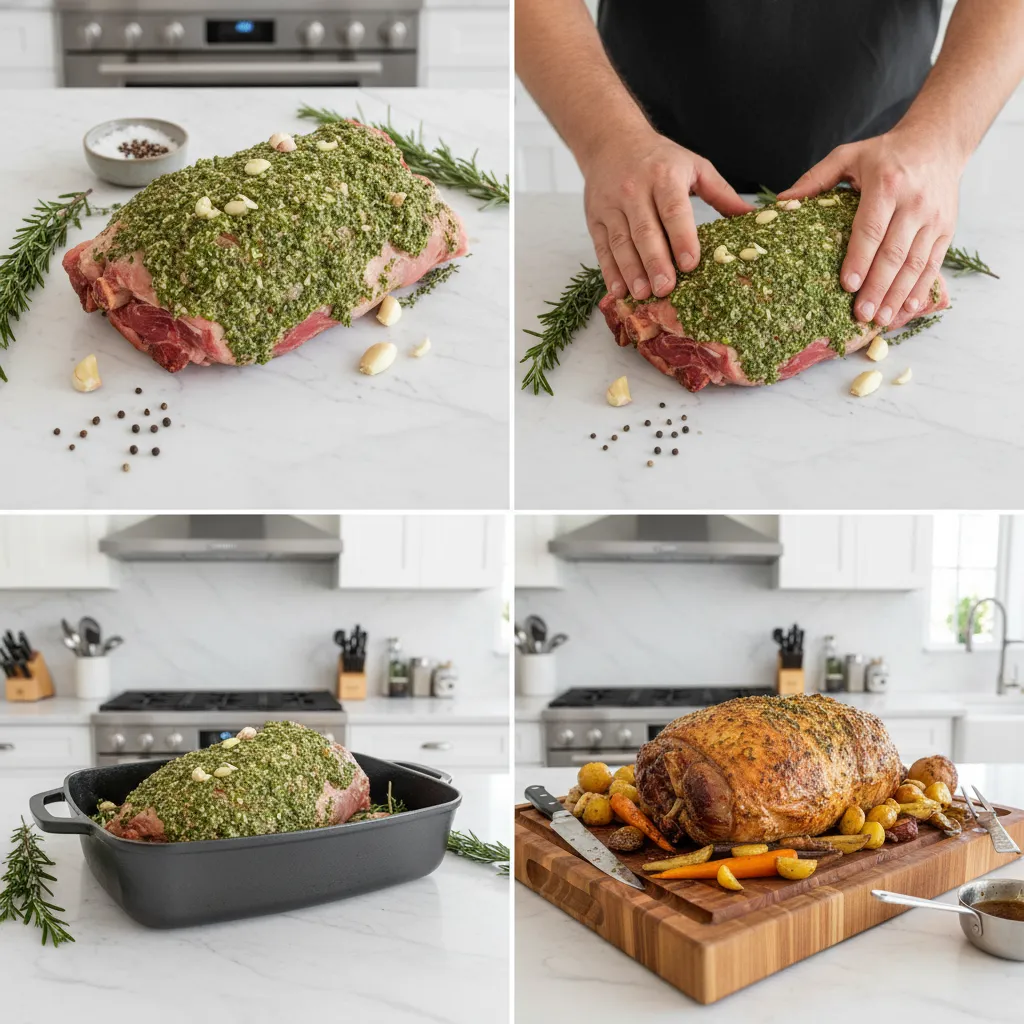
Savory Slow-Roast Lamb Shoulder Recipe
This recipe delivers a wonderfully tender and juicy roast that will become a family favorite. Just follow the simple steps for a meal that is sure to impress.
How to cook Savory Slow-Roast Lamb Shoulder in 5 steps
Ingredients
- 1 bone-in lamb shoulder (approx. 4-5 lbs) patted dry with paper towels
- 8 cloves garlic peeled and lightly smashed
- 4 sprigs fresh rosemary
- 6 sprigs fresh thyme
- 2 tbsp olive oil plus more for searing
- 1 tbsp coarse sea salt
- 2 tsp freshly ground black pepper
- 1 large yellow onion peeled and quartered
- 2 large carrots peeled and roughly chopped
- 2 stalks celery roughly chopped
- 1 cup dry red wine such as Cabernet Sauvignon or Merlot
- 2 cups beef or lamb broth low-sodium
Instructions
- Step 1: Prepare and Sear the Lamb. Preheat your oven to 325°F (160°C). Pat the lamb shoulder completely dry with paper towels. Using a small, sharp knife, make about 8-10 small incisions all over the lamb. In a small bowl, combine 2 tbsp olive oil, coarse sea salt, and black pepper to create a paste. Rub this mixture thoroughly over the entire surface of the lamb. Heat a large Dutch oven or skillet over medium-high heat with a tablespoon of oil. Carefully place the lamb in the hot pan and sear on all sides until a deep brown crust forms, about 3-4 minutes per side. Remove the lamb and set it aside on a plate.
- Step 2: Build the Aromatic Base. To the same Dutch oven, add the quartered onion, chopped carrots, and celery. Sauté the vegetables for 5-7 minutes, stirring occasionally, until they begin to soften and caramelize. Pour in the red wine to deglaze the pan, using a wooden spoon to scrape up all the flavorful browned bits from the bottom. Let the wine simmer and reduce by about half, which should take about 3-5 minutes.
- Step 3: Combine for Braising. Return the seared lamb shoulder to the pot, placing it on top of the bed of vegetables. Tuck the smashed garlic cloves, rosemary, and thyme sprigs around the lamb. Pour in the beef or lamb broth. The liquid should come about one-third to halfway up the side of the lamb shoulder. Bring the liquid to a gentle simmer on the stovetop.
- Step 4: Slow-Roast to Perfection. Once simmering, cover the Dutch oven tightly with its lid (or if using a roasting pan, cover it securely with a double layer of aluminum foil). Carefully transfer the pot to the preheated oven. Let it slow-roast for 4 to 4.5 hours. The lamb is ready when it is exceptionally tender and the meat easily pulls away from the bone with a fork. You can baste the lamb with the pan juices once or twice during the last hour of cooking if desired.
- Step 5: Rest and Serve. Gently remove the lamb from the pot and transfer it to a large cutting board or serving platter. Tent it loosely with foil and let it rest for at least 15-20 minutes. This is crucial for the juices to redistribute. While the lamb rests, you can strain the pan juices into a saucepan. Skim off the excess fat from the surface and simmer the remaining liquid to create a rich, natural gravy. Shred the rested lamb using two forks and serve immediately, drizzled with the warm pan juices.
Notes
Frequently Asked Questions
Can I cook this in a Dutch oven?
Absolutely. A heavy-bottomed Dutch oven is an excellent choice for this recipe. It distributes heat evenly and can go from the stovetop for searing directly into the oven for roasting, which means one less pan to clean. Just make sure it’s large enough to comfortably hold the lamb shoulder.
Should I cover the lamb shoulder while roasting?
Yes, covering the lamb is important for the first few hours of cooking. I recommend using a tight-fitting lid or sealing the roasting pan securely with foil. This traps steam and moisture, which helps break down the connective tissue and keeps the meat from drying out. You can then uncover it for the last 30-45 minutes to allow the skin to get brown and crispy.
How do I know when the lamb shoulder is done?
The best way to tell is by texture, not just temperature. While a meat thermometer is useful, the true test for a slow-cooked shoulder is whether it’s “fork-tender.” You should be able to easily pull the meat apart with a fork. It will be incredibly tender and practically falling off the bone. This usually happens when the internal temperature is around 195-205°F (90-96°C).
Can I prepare the lamb shoulder the night before?
Yes, you can do some of the prep work ahead of time. The night before, you can season the lamb shoulder with the salt, pepper, garlic, and rosemary mixture. Rub it all over, then wrap the lamb tightly and refrigerate it overnight. This acts as a dry brine, allowing the seasonings to penetrate the meat for even more flavor. Just remember to let it sit at room temperature for about an hour before searing.
A Meal Worth Waiting For
This Savory Slow-Roast Lamb Shoulder is a testament to the idea that the best things in life take time. It’s a simple, comforting, and deeply satisfying dish that’s perfect for gathering people you love around the dinner table. The aroma alone is worth the wait, and the final result is a tender, flavorful meal that creates lasting memories. I hope you enjoy making it as much as my family and I do.