
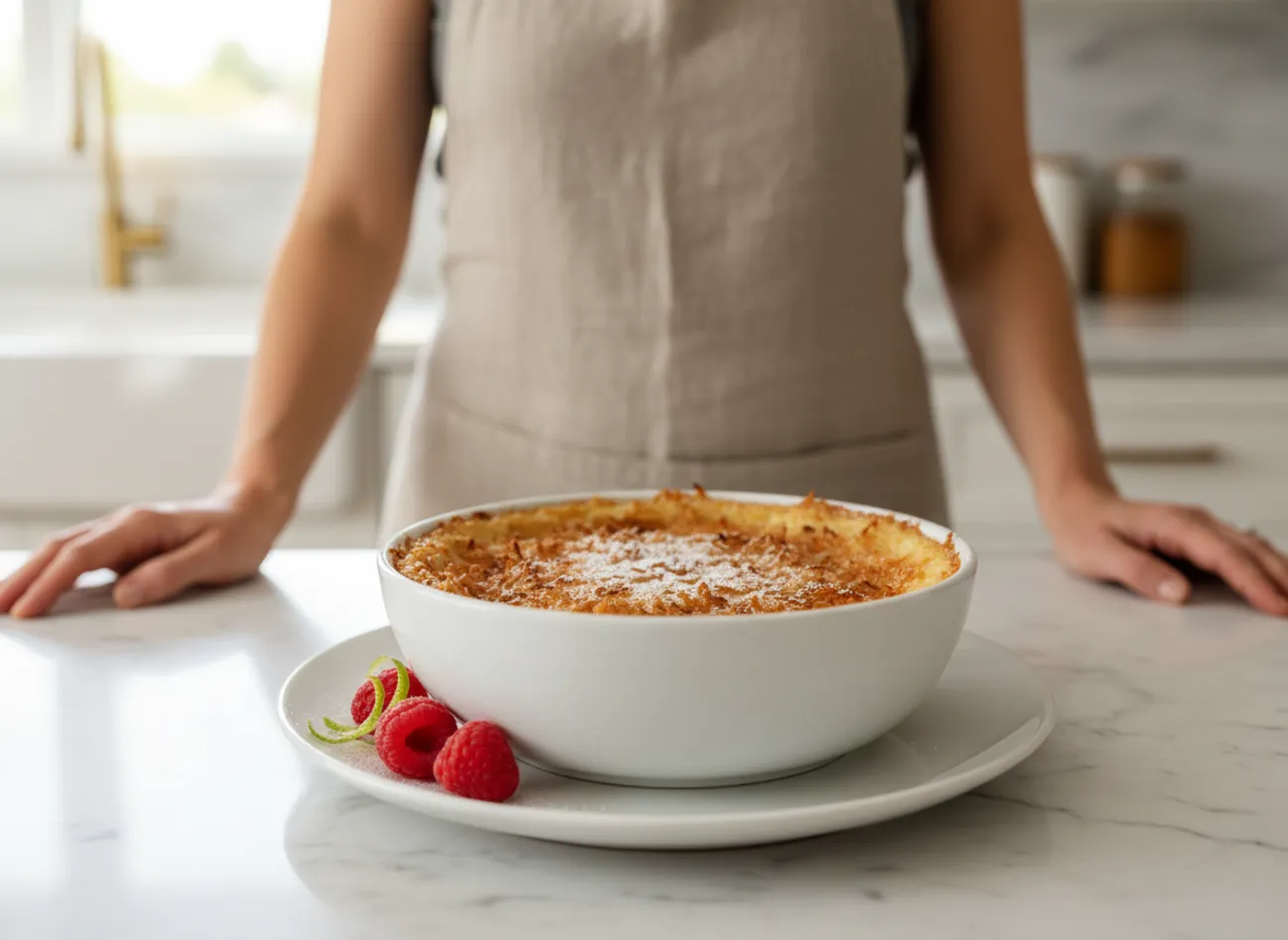
Some of my fondest memories involve the sweet, toasty aroma of coconut wafting from the oven. My grandmother used to make a dessert that seemed like pure magic. She would mix a few simple ingredients in a bowl, pour the thin batter into a pie plate, and bake it. Miraculously, it would separate into three distinct layers: a firm bottom crust, a creamy custard center, and a golden, toasted coconut top. This was her famous Crustless Coconut Custard Pie. It’s a dessert that feels incredibly indulgent yet is surprisingly simple to make.
For years, I thought it was a secret family recipe, but it turns out this wonderful pie has been a favorite in American kitchens for generations. The beauty of this Crustless Coconut Custard Pie is its simplicity. There’s no need to fuss with rolling out dough or blind-baking a crust. The batter does all the work for you, creating a dessert that is both elegant and comforting. It’s the perfect treat for when you crave something special without a lot of effort. This pie is a close cousin to other simple desserts, like these delightful creamy pudding cups, proving that great flavor doesn’t require complexity. This Crustless Coconut Custard Pie is proof that sometimes, the best things in life are the easiest.
Why You’ll Love This Crustless Coconut Custard Pie
This recipe is a true standout for anyone who loves coconut desserts but dislikes the hassle of making a traditional pie crust. It delivers all the creamy, rich flavor you expect from a custard pie with a unique, self-forming texture that will impress your family and friends. Furthermore, it’s a wonderfully versatile dessert that fits many dietary needs without any special substitutions.
The Magic of a Self-Forming Crust
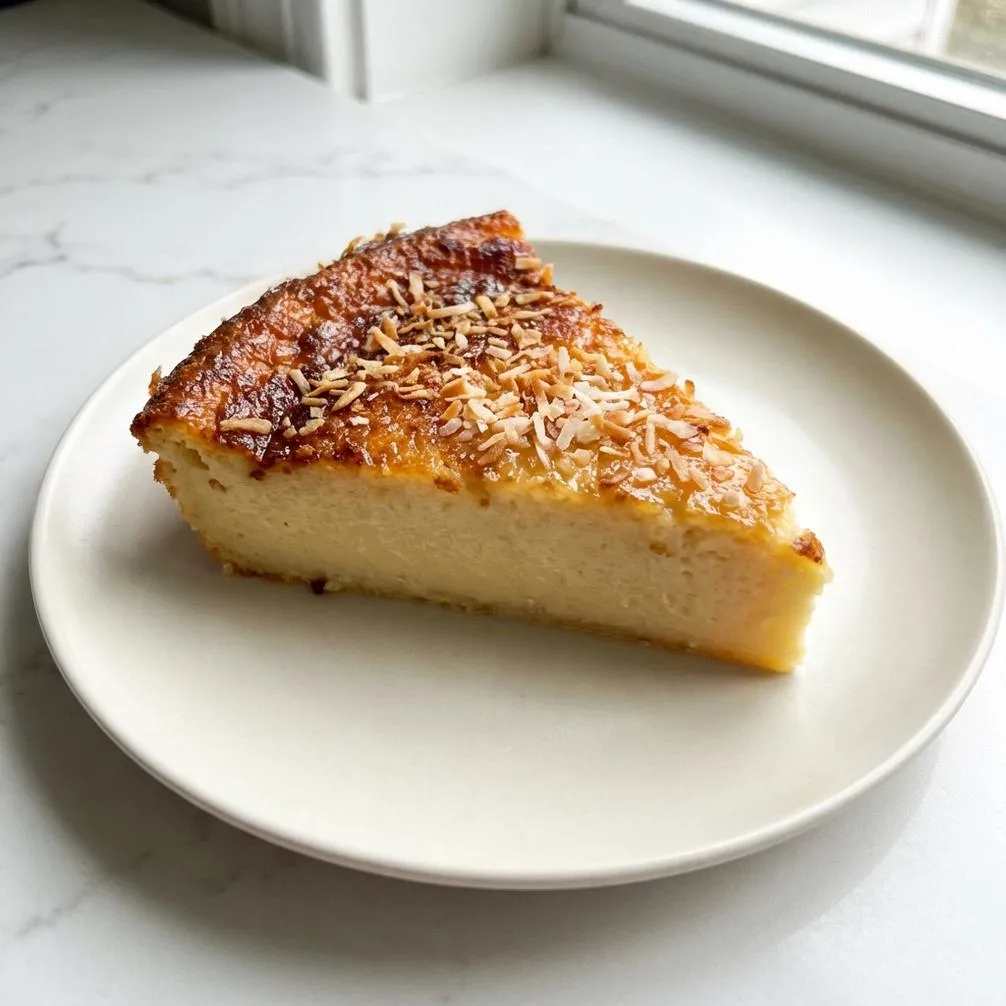
The most captivating feature of this Crustless Coconut Custard Pie is its ability to create its own layers during baking. As the pie bakes, the heavier ingredients, like a small amount of flour or baking mix, sink to the bottom. Consequently, they form a soft, cake-like crust. The eggs and milk set in the middle to create a luscious, smooth custard layer. Finally, the lightweight shredded coconut rises to the top, toasting to a beautiful golden brown and adding a delightful chewiness. This separation happens naturally, giving you a perfectly layered dessert with almost no work. It feels like a little bit of kitchen sorcery every time.
A Naturally Gluten-Free Delight
Because this recipe traditionally uses a very small amount of baking mix, you can easily make it gluten-free. Simply swap the all-purpose baking mix for your favorite gluten-free blend. In fact, the results are virtually identical, maintaining the same creamy texture and delicious flavor. This simple switch makes the Crustless Coconut Custard Pie an excellent choice for serving guests with gluten sensitivities. You don’t have to prepare a separate dessert; everyone can enjoy this one together. It’s a recipe that welcomes everyone to the table.
Key Ingredients for Your Coconut Custard Pie
The ingredient list for this pie is short and sweet, relying on pantry staples to create something truly special. The quality of these basic components directly influences the final result, so choosing them with care makes a noticeable difference in flavor and texture.
Choosing the Right Coconut
For the best texture and flavor, I recommend using sweetened shredded coconut. The sugar in the coconut contributes to the overall sweetness of the pie and helps the top layer brown beautifully. Sweetened coconut flakes also have a moist, chewy texture that contrasts perfectly with the creamy custard. If you only have unsweetened coconut, you can certainly use it, but you might want to add an extra tablespoon or two of sugar to the batter to compensate. The size of the shred also matters; a finer shred will incorporate more smoothly into the custard, while a larger flake will give you a chewier topping.
The Role of Eggs and Milk
Eggs are the backbone of any custard, and this pie is no exception. They provide the structure that allows the filling to set into a rich, creamy layer. Four large eggs are the perfect amount to give the pie body without making it taste overly eggy. When it comes to milk, whole milk provides the best richness and flavor. Its higher fat content results in a creamier, more decadent custard. While you can substitute low-fat milk, the final texture may be slightly less luxurious. For a dairy-free version, canned full-fat coconut milk works as a wonderful alternative, adding an even deeper coconut flavor.
The Story Behind the Coconut Impossible Pie
You may have heard this dessert called by another name: Coconut Impossible Pie. This charming title became popular in the 1970s thanks to a recipe printed on the back of Bisquick boxes. The name reflects the “impossible” way the pie creates its own crust. It was a brilliant marketing move that highlighted the recipe’s magical simplicity and made it a household name for decades.
What Makes It “Impossible”?
The “impossible” part of the Coconut Impossible Pie comes from the simple science of ingredient density. The baking mix, which contains flour, leavening, and fat, is denser than the other liquid ingredients. During the slow, gentle heat of baking, these heavier particles gradually settle at the bottom of the pie dish. As they settle, they form a tender, crust-like base. It’s a classic example of how basic food science can produce amazing results with minimal effort. The process is consistent and reliable, making it a perfect recipe for bakers of all skill levels. Understanding the basics of baking science can explain many of these kitchen wonders.
A Classic American Dessert
The Impossible Pie became an iconic American dessert because it represented convenience and ingenuity. It offered the satisfaction of a homemade pie without the time-consuming process of making and chilling pastry dough. This made it a go-to for busy home cooks who still wanted to put a delicious, from-scratch dessert on the table. The Coconut Impossible Pie variation was particularly popular for its tropical flavor and appealing texture. It remains a nostalgic favorite, reminding many people of family gatherings and potlucks from their childhood.
Tips for Baking a Flawless Crustless Pie
While this recipe is incredibly straightforward, a few simple tips will help you get a perfect result every single time. Paying attention to a couple of details during preparation and baking makes all the difference between a good pie and a great one.
Achieving the Perfect Texture
The key to a silky-smooth custard is to avoid over-mixing the batter. You want to blend the ingredients until they are just combined. Over-mixing can incorporate too much air, which can cause the pie to become tough or rubbery. I recommend mixing the wet ingredients first, then gently folding in the dry ingredients until no streaks remain. Additionally, be careful not to over-bake the pie. It should be set around the edges but still have a slight wobble in the center when you remove it from the oven. The residual heat will continue to cook the custard as it cools, resulting in the perfect creamy consistency.
Storing and Serving Your Pie
This Crustless Coconut Custard Pie is delicious served warm, at room temperature, or chilled. When it’s warm, the custard is soft and spoonable. As it cools, it firms up into a sliceable pie. Personally, I love it best after it has chilled in the refrigerator for at least two hours. The flavors meld together, and the cool, creamy texture is incredibly refreshing. To store leftovers, cover the pie tightly with plastic wrap and keep it in the refrigerator for up to four days. It does not freeze well, as the custard’s texture can become watery upon thawing.
Crustless Coconut Custard Pie Recipe
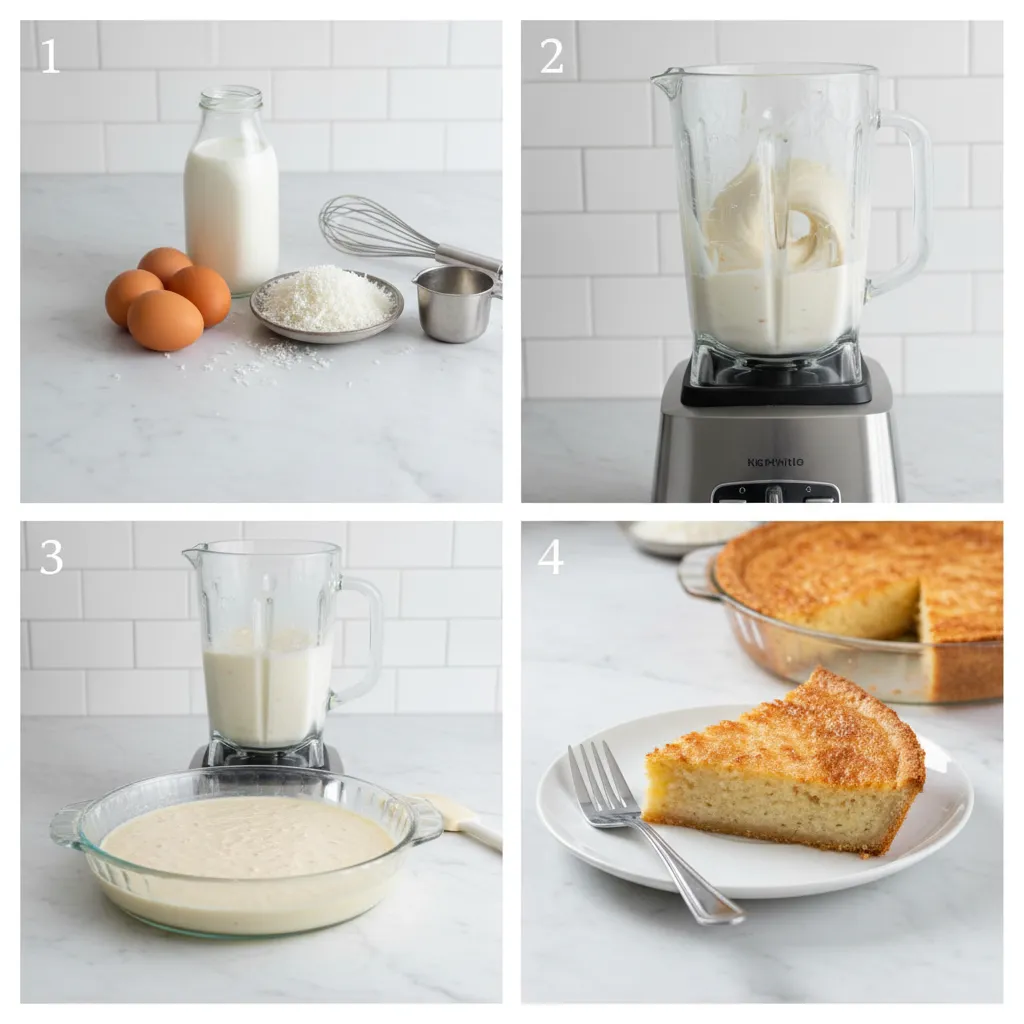
This recipe is your ticket to a delicious, no-fuss dessert that tastes like it took hours to make. Just mix, pour, and bake to enjoy this magical, self-layering pie.
Easy recipe for Crustless Coconut Custard Pie: 5 steps
Ingredients
- 4 large eggs at room temperature
- 2 cups whole milk
- ¾ cup granulated sugar
- ½ cup unsalted butter melted and slightly cooled
- ½ cup gluten-free all-purpose baking mix such as Bisquick™ Gluten Free
- 1 cup sweetened shredded coconut plus more for topping, if desired
- 1 tsp vanilla extract
- ¼ tsp salt
Instructions
- Preheat your oven to 350°F (175°C). Generously grease a 9-inch pie plate with butter or non-stick cooking spray.
- In a blender, combine the eggs, whole milk, granulated sugar, melted butter, gluten-free baking mix, vanilla extract, and salt. If you don’t have a blender, you can use a large mixing bowl and a whisk.
- Blend on medium speed for about 1 minute, or whisk vigorously, until the batter is completely smooth and slightly frothy. Scrape down the sides as needed to ensure everything is well incorporated.
- Stir in the 1 cup of sweetened shredded coconut with a spatula. Pour the entire batter mixture into your prepared pie dish. The coconut will float to the top, which is normal.
- Bake for 45 to 55 minutes. The pie is done when the center is nearly set (it should only have a slight jiggle) and a knife inserted near the center comes out clean. The top will be a beautiful golden brown. Let it cool on a wire rack for at least 30 minutes before slicing. This pie is delicious served warm or chilled.
Notes
Frequently Asked Questions
Why is my crustless coconut pie runny?
A runny pie is almost always a sign of under-baking. The pie should still have a slight jiggle in the very center when you take it out, but the rest of it should be set. If the entire pie is wobbly, it needs more time in the oven. Allow it to cool completely, then chill it for several hours, as this helps the custard firm up considerably.
Can I make crustless coconut custard pie ahead of time?
Absolutely! This pie is a great make-ahead dessert. You can bake it a day or two in advance and store it, covered, in the refrigerator. In my opinion, the flavor is even better the next day as the coconut and vanilla have more time to blend.
Does crustless coconut pie need to be refrigerated?
Yes, because this pie contains eggs and milk, it must be refrigerated for food safety. After it has cooled to room temperature on the counter, cover it tightly and place it in the refrigerator. Store any leftovers there as well.
Is coconut impossible pie the same as crustless coconut custard pie?
Yes, they are essentially the same dessert. “Coconut Impossible Pie” was the name popularized by the Bisquick brand for a pie that magically forms its own crust. “Crustless Coconut Custard Pie” is a more descriptive name for the same type of recipe. Both refer to a simple, blended custard pie that separates into layers as it bakes.
A Simple Dessert to Share
This Crustless Coconut Custard Pie is more than just a recipe; it’s a piece of comforting nostalgia that is incredibly easy to recreate. It’s the perfect dessert for any occasion, from a quiet weeknight treat to a holiday gathering. I hope you and your loved ones enjoy its simple magic as much as my family always has. Happy baking


Comments and Reviews