
Some of my fondest memories involve the smell of my grandmother’s kitchen on a Sunday morning. The rich aroma of baking pastry and savory custard meant one thing: quiche was on the menu. It felt like such a special treat, yet it was surprisingly simple. This is the magic of understanding traditional quiche types. They are elegant enough for a holiday brunch but straightforward enough for a satisfying weeknight dinner. While a quick meal like a parmesan crusted sheet pan chicken has its place, taking the time to master classic dishes feels deeply rewarding.
These time-honored recipes prove that you don’t need complicated ingredients to create something spectacular. Learning the handful of classic, traditional quiche types gives you a foundation you can build on for years. From the smoky bacon of a Quiche Lorraine to the earthy spinach of a Quiche Florentine, each one tells a delicious story. Let’s look at the secrets behind the best traditional quiche types together.
Understanding the Foundation of Traditional Quiche Types
Before we get into specific recipes, it’s important to understand what makes a quiche truly great. All traditional quiche types share two fundamental components: a rich, savory custard and a flaky, buttery crust. When you get these two elements right, the rest is just delicious variation. Consequently, mastering the basics is your first step toward quiche perfection.
The Perfect Custard Base
The heart of any quiche is its custard filling. The ideal custard is smooth, creamy, and just firm enough to hold its shape when sliced. The secret is the ratio of eggs to dairy. A general rule of thumb is to use one large egg for every half-cup of dairy. For an extra-rich result, I always use heavy cream, but you can also use half-and-half or whole milk for a slightly lighter texture.
Moreover, proper seasoning is key. Salt and freshly ground black pepper are essential, of course. For a touch of classic French flavor, I add a pinch of freshly grated nutmeg to the custard. This small addition provides a subtle warmth that beautifully complements the savory fillings in most traditional quiche types. Whisk everything together until it is smooth and uniform, but avoid over-mixing, which can make the final texture tough.
The Indispensable Buttery Crust
A soggy bottom can ruin an otherwise perfect quiche. For this reason, preparing the crust correctly is absolutely critical. The goal is a crust that is golden, crisp, and sturdy enough to contain the rich filling without becoming saturated. To achieve this, you must blind-bake (or par-bake) your pastry shell.
This process involves lining the unbaked crust with parchment paper, filling it with pie weights or dried beans, and baking it until it’s lightly golden. This step sets the pastry and creates a barrier against the wet custard filling. Whether you make your own pâte brisée from scratch or use a quality store-bought pie dough, blind-baking is the non-negotiable secret to a perfectly crisp foundation.
Exploring Classic Quiche Variations
Once you have a handle on the crust and custard, you can start having fun with fillings. The world of traditional quiche types is full of incredible flavor combinations that have been loved for generations. Each classic has a distinct personality, defined by just a few high-quality ingredients.
Quiche Florentine
Quiche Florentine is a timeless vegetarian option that is both simple and deeply satisfying. Its star ingredients are spinach and cheese, typically Gruyère, Swiss, or a mix. The name “Florentine” indicates a dish prepared in the style of Florence, Italy, which almost always involves spinach.
The most important step in making a great Quiche Florentine is to prepare the spinach properly. Whether you use fresh or frozen spinach, you must cook it down and squeeze out as much water as possible. Any excess moisture will make your custard watery and your crust soggy. After that, simply layer the dry spinach and grated cheese in your par-baked crust before pouring the custard over the top.
Quiche aux Champignons
Another beloved vegetarian classic is Quiche aux Champignons, or mushroom quiche. This version celebrates the deep, earthy flavor of mushrooms. You can use a single type of mushroom, like cremini, or a mixture of wild mushrooms for more complex flavor.
Just like with spinach, managing moisture is crucial. Mushrooms release a lot of water when they cook. Therefore, you should always sauté them in a bit of butter or oil until they are well-browned and their liquid has evaporated. Many recipes also add shallots or garlic to the pan for an extra layer of flavor. Once cooked, scatter the mushrooms and some cheese in the crust and proceed with the custard.
The Quintessential Quiche Lorraine Recipe
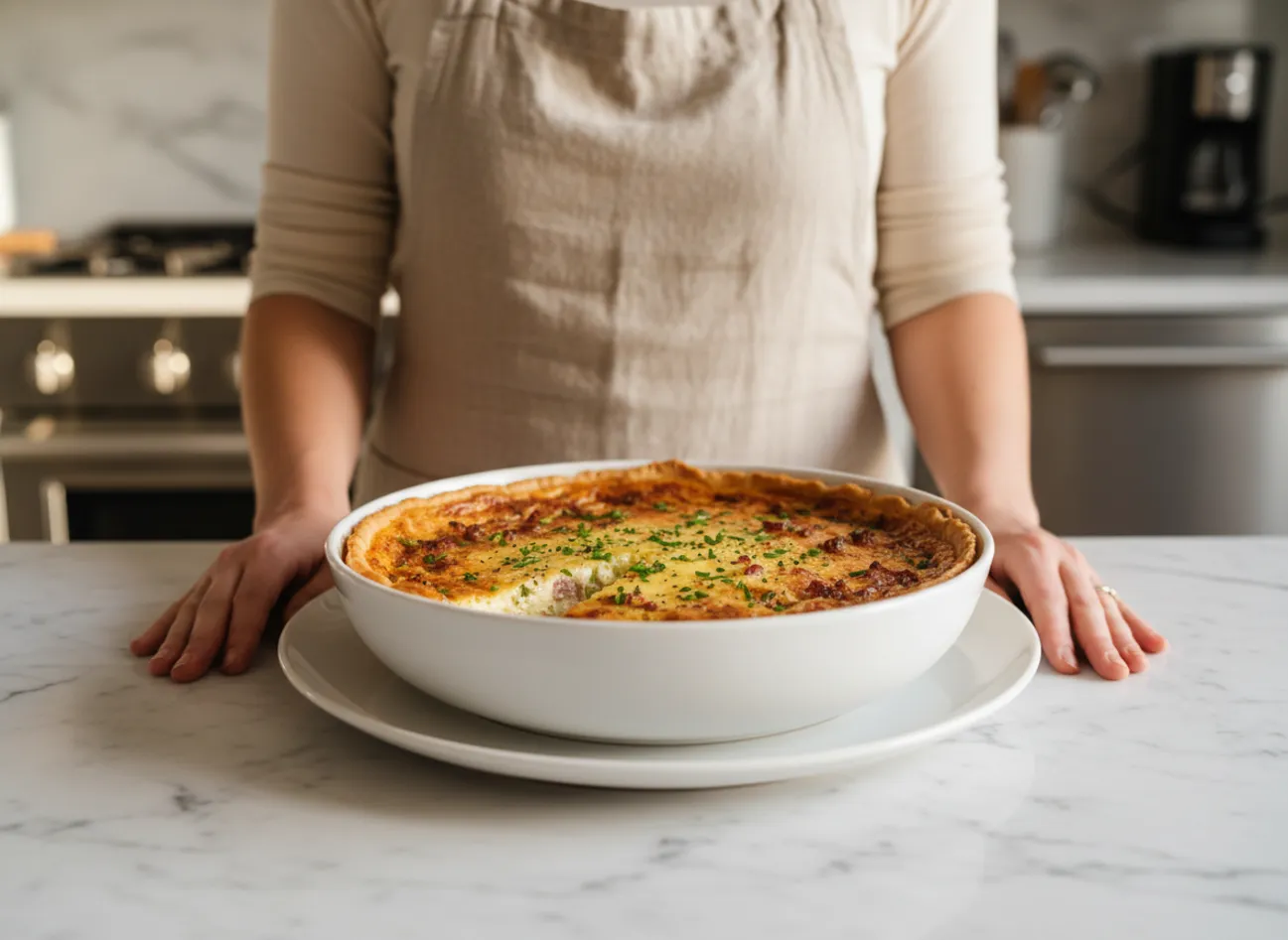
When people think of quiche, they are most often thinking of Quiche Lorraine. It is, without a doubt, the most famous of all the traditional quiche types. This iconic dish originated in the medieval kingdom of Lorraine in France and has since become a staple of French cuisine worldwide. A proper Quiche Lorraine recipe is a testament to the idea that simple ingredients can produce extraordinary results.
The History and Authenticity
Interestingly, the original Quiche Lorraine was a very simple affair. It was an open-faced tart filled with a mixture of eggs, heavy cream, and smoked bacon or lardons. There was no cheese. The addition of cheese, typically Gruyère, became popular later on and is now considered standard in most modern interpretations.
The dish’s popularity in the United States grew immensely after Julia Child famously introduced it to American home cooks in the 1960s. She presented it as an elegant yet accessible dish, perfect for lunch or a light supper, and its fame has endured ever since.
Perfecting the Bacon and Cheese
The two defining ingredients of a modern Quiche Lorraine recipe are bacon and Gruyère cheese. For the best flavor, use thick-cut bacon and cook it until it is perfectly crisp. This not only develops its smoky taste but also renders out most of the fat, preventing the quiche from becoming greasy. After cooking, crumble or chop it into small pieces.
When it comes to cheese, Gruyère is the classic choice for a reason. Its nutty, slightly sweet flavor melts beautifully and complements the salty bacon perfectly. Be sure to grate your own cheese from a block, as pre-shredded cheeses often contain anti-caking agents that can affect how they melt into the custard.
More Beloved Traditional Quiche Types
Beyond the famous Lorraine and Florentine, several other traditional quiche types deserve a place in your cooking rotation. These variations show the amazing adaptability of the basic quiche formula, allowing different star ingredients to shine against the creamy custard backdrop.
Quiche au Fromage (Cheese Quiche)
Sometimes, the simplest things are the best. Quiche au Fromage is a cheese quiche, and its beauty lies in its elegant simplicity. Without other fillings to compete, the focus is entirely on the rich custard and the delicious flavor of the cheese.
You can make this quiche with a single type of cheese, like a sharp cheddar or a tangy Comté, or you can create a more complex flavor profile by using a blend. A popular combination in France is a mix of three cheeses, often including Gruyère, Emmental, and a local goat cheese. This quiche is wonderfully versatile and serves as a perfect canvas if you ever decide to add other ingredients.
Quiche with Asparagus and Goat Cheese
While perhaps a more modern classic, the combination of asparagus and goat cheese has quickly become a brunch favorite. This pairing offers a delightful contrast in both flavor and texture. The fresh, slightly earthy taste of the asparagus cuts through the richness of the custard, while the tangy, creamy goat cheese adds a bright, distinctive flavor.
For the best results, trim the woody ends from the asparagus and blanch the spears briefly in boiling water. This pre-cooking step helps them retain their bright green color and tender-crisp texture. Arrange the spears in the par-baked crust, crumble goat cheese over the top, and then pour in the custard. It’s a sophisticated and delicious option, especially in the spring when asparagus is in season.
Classic Quiche Lorraine Recipe
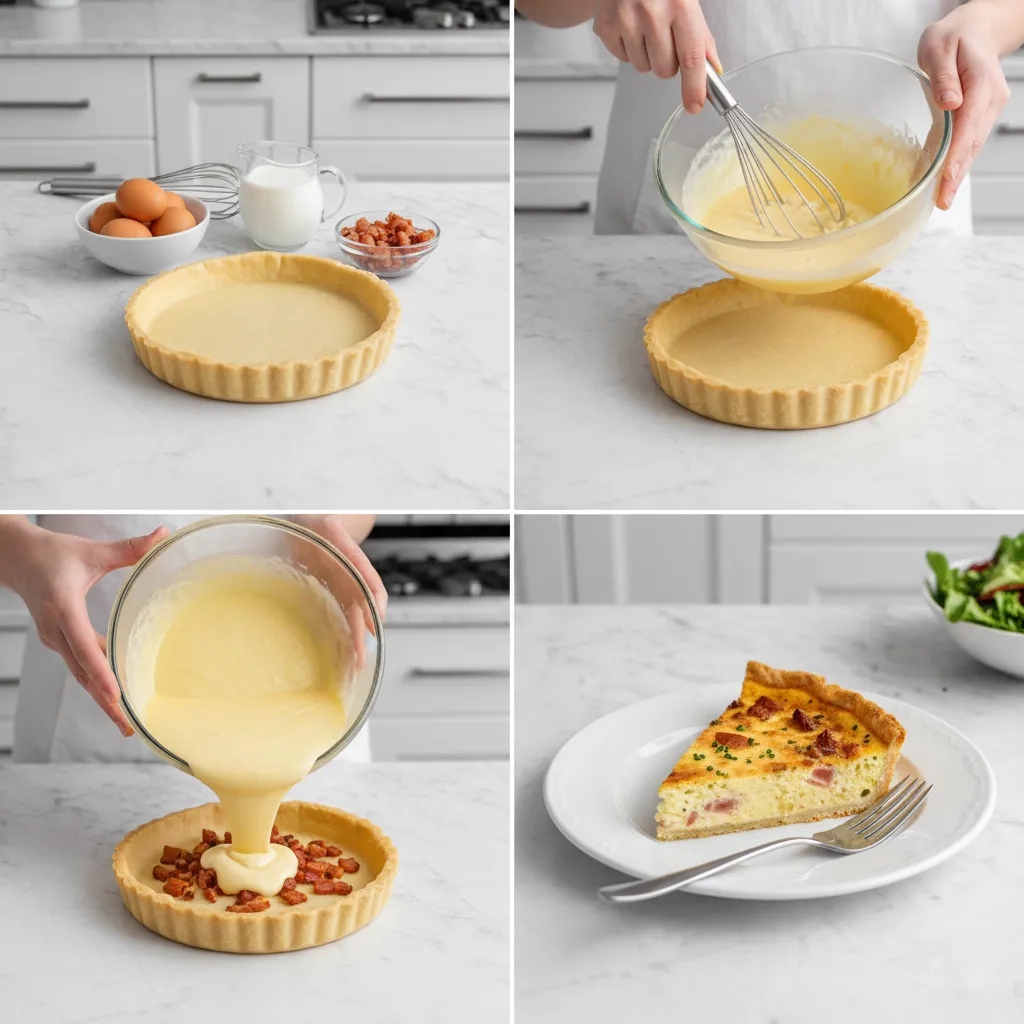
Here is a straightforward guide to making the most famous of all traditional quiche types. Follow these steps for a perfect brunch centerpiece.
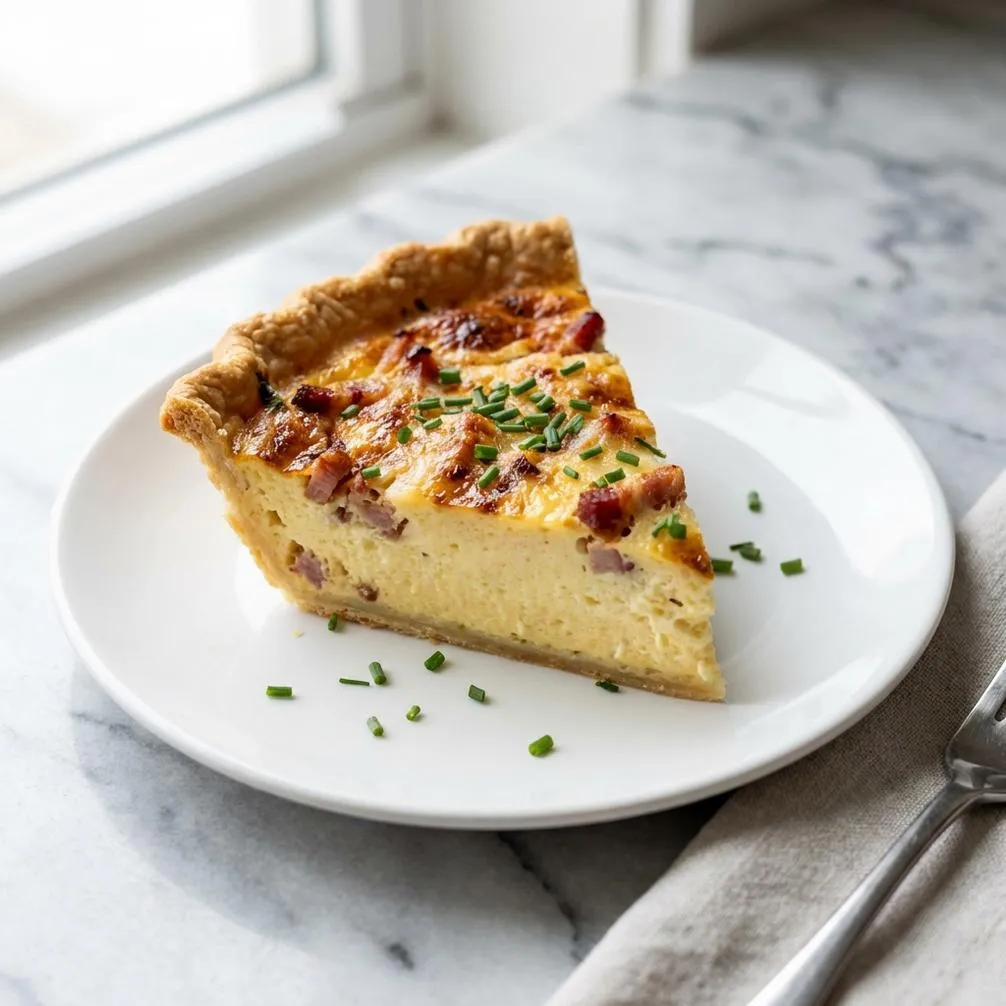
Secret to the best 5 Traditional Quiche Types
Ingredients
For the Base (Crust & Custard):
- 1 9-inch unbaked pie crust store-bought or homemade
- 3 large eggs
- 1.5 cups heavy cream or half-and-half for a lighter version
- 0.5 tsp salt
- 0.25 tsp black pepper freshly ground
- 1 pinch nutmeg freshly grated is best
Choose ONE Filling Variation:
1. Classic Quiche Lorraine:
- 6 slices bacon cooked and crumbled
- 1 cup Gruyère cheese shredded
2. Quiche Florentine:
- 10 oz frozen chopped spinach thawed and squeezed very dry
- 0.5 cup Swiss or Gruyère cheese shredded
- 0.25 cup yellow onion finely chopped and sautéed until soft
3. Quiche aux Champignons (Mushroom):
- 8 oz mushrooms sliced and sautéed with 1 minced garlic clove
- 1 cup Gruyère cheese shredded
4. Quiche au Fromage (Three Cheese):
- 1.5 cups mixed shredded cheese such as Gruyère, sharp cheddar, and Swiss
5. Broccoli and Cheddar Quiche:
- 1 cup small broccoli florets steamed or blanched until tender-crisp
- 1 cup sharp cheddar cheese shredded
Instructions
- Preheat your oven to 375°F (190°C). Press the pie crust into a 9-inch pie dish or quiche pan. For an extra crisp crust, ‘blind bake’ it: line the crust with parchment paper, fill with pie weights or dried beans, and bake for 15 minutes. Remove the weights and parchment and bake for another 5 minutes until lightly golden. Set aside.
- In a large mixing bowl, whisk together the 3 large eggs. Slowly whisk in the heavy cream until smooth. Season the custard mixture with salt, pepper, and a pinch of nutmeg.
- Prepare your chosen filling. If using onions, mushrooms, or other vegetables, ensure they are pre-cooked and any excess moisture is removed to prevent a soggy quiche.
- Assemble the quiche by layering your chosen filling ingredients (cheese, bacon, vegetables, etc.) evenly on the bottom of the pre-baked pie crust. Place the cheese in first to create a moisture barrier.
- Carefully and slowly pour the egg and cream custard mixture over the fillings in the crust. Pour slowly to allow the custard to settle around the fillings.
- Bake for 35-45 minutes, or until the center is just set (it should have a slight jiggle) and the top is golden brown. A knife inserted near the center should come out clean.
- Let the quiche cool on a wire rack for at least 10-15 minutes before slicing and serving. This allows the custard to set fully, making it easier to cut clean slices. Quiche can be served warm, at room temperature, or cold.
Notes
- Prevent a Soggy Bottom: Blind baking the crust is the number one secret. Sprinkling the cheese on the bottom of the crust before adding other fillings also creates a barrier against moisture.
- Don’t Overbake: The quiche is done when the center has a very slight wobble. It will continue to cook and set from residual heat as it cools. Overbaking can lead to a rubbery texture.
- Storage: Leftover quiche can be stored, tightly covered, in the refrigerator for up to 3-4 days. It reheats well in the oven or microwave.
Frequently Asked Questions About Quiche
What is the most classic quiche?
The most classic and well-known quiche is undoubtedly the Quiche Lorraine. Originating from the Lorraine region of France, its traditional filling consists of bacon (lardons), eggs, and heavy cream. Most modern versions also include Gruyère cheese.
What is the difference between quiche and frittata?
The main difference is the crust. A quiche always has a pastry crust, whereas a frittata is crustless. Additionally, a quiche is typically baked slowly in the oven, giving it a creamy, set custard. A frittata is usually started on the stovetop and then finished in the oven or under a broiler, resulting in a firmer, more egg-forward texture.
Should I pre-bake my quiche crust?
Yes, absolutely. Pre-baking, or blind-baking, the crust is the most effective way to prevent a soggy bottom. Baking the empty shell for a short time helps it set and creates a moisture-resistant barrier, keeping the crust crisp and flaky even after you add the wet custard filling.
Can you freeze quiche?
Yes, quiche freezes very well. You can freeze it either baked or unbaked. To freeze a baked quiche, let it cool completely, then wrap it tightly in plastic wrap and then foil. To reheat, bake it from frozen at 350°F until warmed through. To freeze an unbaked quiche, place it on a baking sheet until firm, then wrap it well. Bake it directly from the freezer, adding about 15-20 minutes to the original baking time.
Conclusion
From the smoky richness of a Quiche Lorraine to the simple elegance of a Quiche au Fromage, these five traditional quiche types offer something for every occasion. Mastering them is like learning a delicious new language—once you know the grammar of crust and custard, you can create endless beautiful sentences with different fillings.
I hope this guide inspires you to bring these classics into your own kitchen. There is so much joy to be found in recreating a dish that has been loved for generations. So, roll out some pastry, whisk up some eggs, and fill your home with the comforting aroma of a perfectly baked quiche.

Comments and Reviews