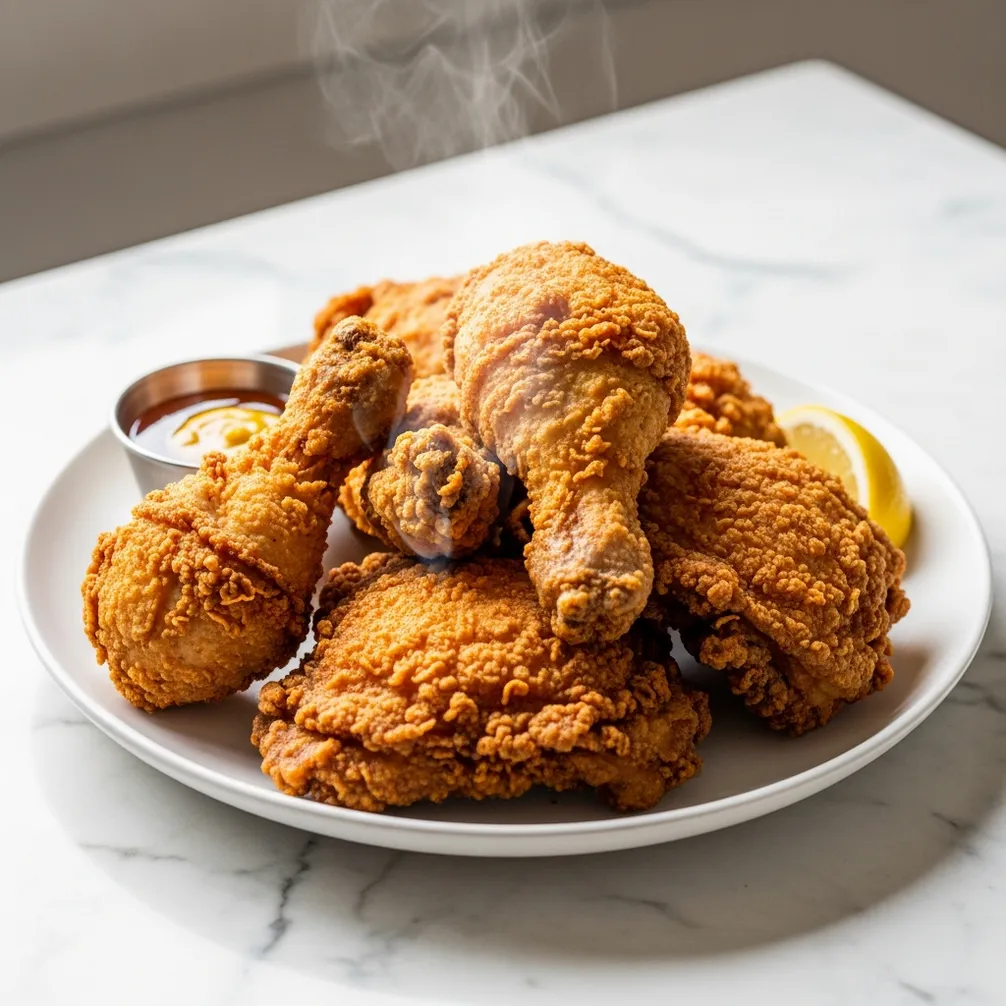
Easy recipe for Best Fried Chicken: 7 Secrets
Craving the Best Fried Chicken? Get our easy recipe for ultra crispy skin and juicy, tender meat. Discover the simple secrets to make it now.
Ingredients
- 3-4 lbs bone-in, skin-on chicken pieces (about 8 pieces, e.g., 2 breasts, 2 thighs, 2 drumsticks, 2 wings)
- 2 cups buttermilk (Secret 1: for tenderizing)
- 1 tbsp hot sauce (optional, for buttermilk soak)
- 2 cups all-purpose flour
- ¼ cup cornstarch (Secret 2: for extra crispiness)
- 1 tbsp baking powder (Secret 2: for a lighter, crispier coating)
- 2 tsp salt (Secret 6: important for flavor)
- 1 tsp black pepper (Secret 6)
- 1 tsp paprika (Secret 6)
- ½ tsp garlic powder (Secret 6)
- ½ tsp onion powder (Secret 6)
- ¼ tsp cayenne pepper (optional, for a kick, Secret 6)
- 4-6 cups vegetable oil, peanut oil, or shortening (for frying, choose high smoke point oil)
Instructions
- Secret 1: The Buttermilk Soak. In a large bowl, combine the buttermilk and hot sauce (if using). Add the chicken pieces, ensuring they are fully submerged. Cover and refrigerate for at least 2 hours, or preferably overnight, to tenderize the meat and infuse flavor.
- When ready to fry, remove the chicken from the refrigerator and let it sit at room temperature for about 30 minutes. Meanwhile, prepare your dredging station. In a shallow dish, whisk together the flour, cornstarch, baking powder, salt, black pepper, paprika, garlic powder, onion powder, and cayenne pepper (if using). This is Secret 2: The Right Coating Mix – the cornstarch and baking powder are key for ultra-crispy results!
- Remove chicken pieces from the buttermilk, letting excess drip off slightly. Dredge each piece thoroughly in the flour mixture, pressing firmly to ensure the coating adheres well. Shake off any excess. Place the coated chicken on a wire rack set over a baking sheet. Let it rest for at least 10-15 minutes; this helps the coating stick better during frying.
- In a heavy-bottomed pot or Dutch oven (Secret 7: Use a Heavy-Bottomed Pot for consistent heat), pour enough oil to reach a depth of about 2-3 inches. Heat the oil over medium-high heat until it reaches 350°F (175°C) on a deep-fry thermometer. This is Secret 3: The Proper Oil Temperature – crucial for crispiness without greasiness. It's often best to start a bit higher as the chicken will lower the temperature.
- Carefully lower 2-3 pieces of chicken into the hot oil using tongs. Secret 4: Don't Crowd the Pan – frying in batches is essential to maintain oil temperature and ensure even cooking. Fry for about 6-8 minutes per side, turning occasionally, until golden brown and cooked through. Larger pieces like breasts and thighs will take longer than wings and drumsticks. The internal temperature should reach 165°F (74°C).
- Once cooked, remove the chicken from the oil and place it on a clean wire rack set over a baking sheet to drain excess oil. Do not place it directly on paper towels initially, as this can make the bottom soggy. Repeat with remaining chicken pieces, ensuring the oil returns to 350°F (175°C) before adding the next batch.
- Secret 5: Rest the Chicken. Let the fried chicken rest for 5-10 minutes before serving. This allows the juices to redistribute, resulting in incredibly moist and tender meat.
Notes
More on Secret 3 (Oil Temperature): If your oil is too cold, the chicken will absorb too much oil and become greasy. If it's too hot, the outside will burn before the inside cooks. A thermometer is your best friend!
Secret 6 (Seasoning): Don't underestimate the power of seasoning! Taste your flour mixture before dredging to ensure it's punchy enough. You can adjust the spices to your preference.
For an extra crispy layer, you can do a double dredge: buttermilk-soaked chicken > flour mix > buttermilk > flour mix again. However, for 'easy', a single thorough dredge is sufficient with this coating mix.
Store leftover fried chicken in an airtight container in the refrigerator for up to 3-4 days. Reheat in an oven or air fryer for best results.
